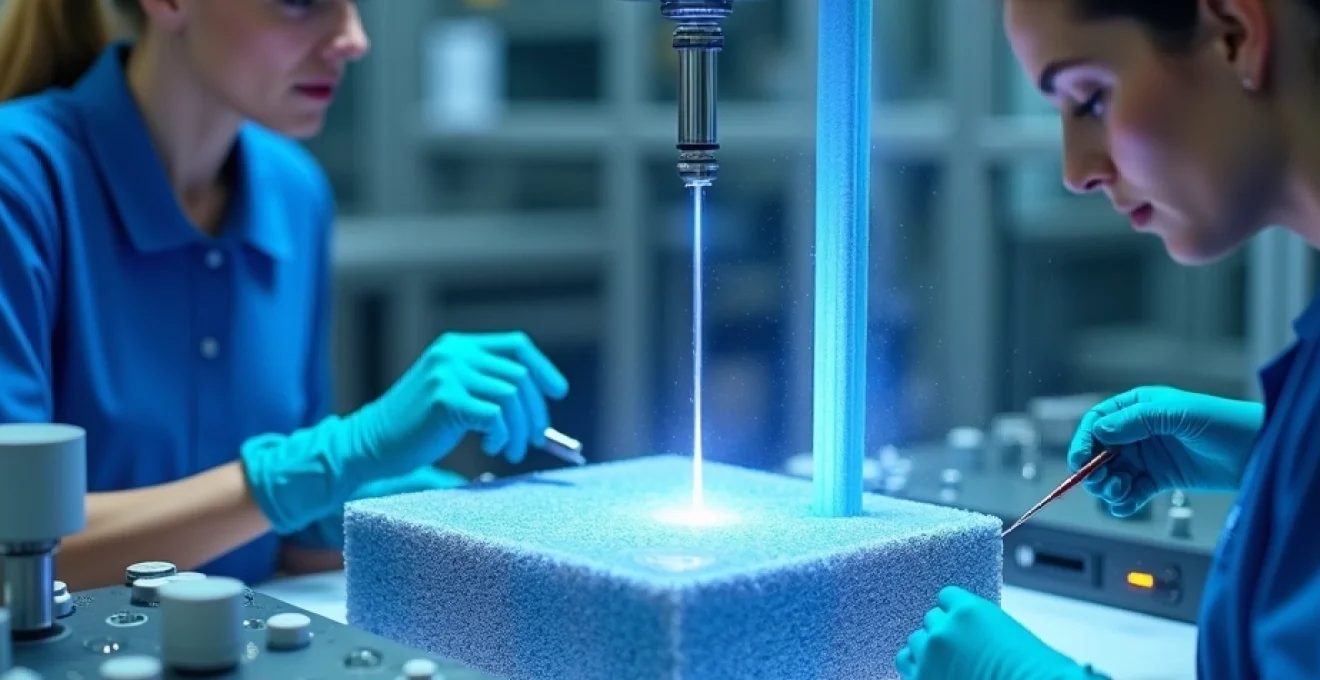
The integration of gas technology into polymer processing has transformed modern manufacturing, offering unprecedented opportunities to enhance part quality while reducing production costs. Gas-assisted injection moulding represents a sophisticated evolution beyond traditional thermoplastic processing methods, utilising precisely controlled nitrogen or carbon dioxide injection to achieve superior dimensional stability, eliminate surface defects, and create complex hollow geometries previously impossible with conventional techniques.
This revolutionary approach addresses fundamental challenges in polymer processing, from sink mark elimination in thick-walled components to weight reduction in large structural parts. The technology’s versatility spans across automotive, aerospace, consumer goods, and industrial applications, delivering consistent quality improvements that manufacturers increasingly demand in today’s competitive marketplace.
Fundamentals of Gas-Assisted injection moulding technology
Gas-assisted injection moulding fundamentally alters the traditional injection moulding process by introducing pressurised gas into the molten polymer during specific phases of the moulding cycle. This innovative approach creates a dual-pressure system where the gas acts as an internal packing medium, maintaining consistent pressure throughout the cooling phase while simultaneously forming controlled hollow sections within the component.
The process begins with partial cavity filling, typically 70-80% of the total mould volume, followed by precisely timed gas injection. The gas travels through the molten core, creating a pressure bubble that pushes the polymer against the mould walls. This internal pressure remains active throughout the cooling cycle, compensating for material shrinkage and maintaining optimal surface contact with the mould cavity.
Nitrogen gas injection mechanisms in thermoplastic processing
Nitrogen serves as the primary gas medium in most gas-assisted applications due to its inert chemical properties and excellent pressure transmission characteristics. The nitrogen injection system operates through sophisticated pressure control units that monitor and adjust gas flow rates in real-time, ensuring consistent pressure delivery throughout the injection cycle.
The gas injection timing proves critical for optimal results. Early injection may cause breakthrough issues where gas escapes through thin wall sections, while delayed injection fails to provide adequate packing pressure. Modern control systems utilise cavity pressure sensors and melt temperature monitoring to determine precise injection timing, typically occurring when the plastic skin reaches 0.5-1.0mm thickness.
CO2 foaming agents vs traditional nitrogen systems
Carbon dioxide foaming represents an alternative approach to conventional nitrogen injection, particularly effective in structural foam applications. CO2 offers unique advantages in specific polymer systems , creating microcellular structures that reduce part weight while maintaining mechanical properties. The gas dissolves more readily in certain thermoplastics, creating uniform cell structures throughout the component cross-section.
However, nitrogen systems provide superior control precision and broader material compatibility. The choice between CO2 and nitrogen depends on specific application requirements, with CO2 excelling in foamed applications where weight reduction takes precedence over hollow section formation. Nitrogen remains the preferred option for applications requiring precise dimensional control and superior surface quality.
Mucell microcellular injection moulding process parameters
Microcellular injection moulding utilises supercritical fluid technology to create foam structures at the cellular level. This advanced technique requires precise parameter control, including shot size reduction of 5-20%, mould temperature adjustments, and specialised injection profiles. The process creates millions of microscopic cells per cubic centimetre, resulting in significant weight reduction without compromising structural integrity.
Temperature management becomes crucial in microcellular processing, with mould temperatures typically reduced by 10-15°C compared to conventional moulding. This temperature reduction prevents excessive cell growth while maintaining adequate flow characteristics. Injection speed profiles require careful optimisation to prevent cell collapse during filling while ensuring complete cavity filling.
Gas pressure control systems and flow rate optimisation
Modern gas injection systems incorporate advanced pressure monitoring and control technologies that enable real-time adjustments throughout the moulding cycle. These systems typically operate within pressure ranges of 50-200 bar, with flow rates varying from 0.1 to 10 standard litres per minute depending on component size and wall thickness requirements.
Flow rate optimisation involves balancing gas penetration distance with pressure maintenance requirements. Excessive flow rates can cause gas breakthrough in thin sections, while insufficient flow fails to provide adequate hollow section formation. Advanced control algorithms analyse cavity pressure feedback to automatically adjust gas flow parameters, ensuring consistent part quality across production runs.
Advanced Gas-Assisted moulding techniques for complex geometries
The evolution of gas-assisted technology has produced several specialised techniques designed to address specific manufacturing challenges. These advanced methods enable the production of increasingly complex geometries while maintaining the fundamental benefits of traditional gas assistance. Each technique offers unique advantages for particular applications, allowing manufacturers to select the most appropriate approach based on part requirements and production constraints.
Structural foam moulding with endothermic chemical blowing agents
Structural foam moulding combines gas assistance with chemical blowing agents to create lightweight components with exceptional strength-to-weight ratios. Endothermic blowing agents decompose at specific temperatures, releasing nitrogen gas that creates a cellular core structure surrounded by solid skin layers. This technique proves particularly effective for large automotive panels and industrial components where weight reduction remains paramount.
The endothermic reaction requires precise temperature control to ensure proper agent activation. Typical processing temperatures range 20-30°C above standard injection temperatures, with decomposition occurring during the cooling phase. This delayed activation prevents premature foaming while ensuring adequate gas generation for proper cell structure development. The resulting parts exhibit reduced weight of 15-25% compared to solid equivalents while maintaining comparable mechanical properties.
Counter-pressure moulding technology for automotive components
Counter-pressure moulding applies external gas pressure to the mould cavity exterior, creating a controlled pressure differential that enhances surface quality and dimensional accuracy. This technique particularly benefits automotive exterior panels where surface imperfections prove unacceptable. The external pressure prevents sink mark formation while enabling the use of standard injection parameters.
Implementation requires specialised mould designs incorporating gas channels and pressure chambers surrounding the cavity. The counter-pressure system maintains 10-50 bar external pressure throughout the cooling cycle, effectively eliminating volumetric shrinkage effects. This approach enables the production of Class A automotive surfaces without secondary finishing operations, reducing overall production costs.
Push-pull gas injection for hollow part manufacturing
Push-pull gas injection represents an advanced variant of traditional gas assistance, utilising alternating pressure cycles to optimise gas distribution and hollow section formation. The technique involves initial gas injection followed by controlled pressure reduction and subsequent re-pressurisation, creating improved gas penetration in complex geometries.
This method proves particularly effective for components with multiple branches or varying wall thicknesses. The pressure cycling helps redistribute molten material, ensuring uniform wall thickness distribution and eliminating potential weak points. Processing parameters require careful optimisation, with cycle timing typically ranging from 2-8 seconds depending on component complexity and material characteristics.
Multi-zone gas injection strategies for large panel production
Large panel components often require multiple gas injection points to ensure adequate pressure distribution across the entire surface area. Multi-zone strategies divide the component into sections, each with independent gas control systems that can operate simultaneously or sequentially based on filling patterns and cooling requirements.
Zone coordination becomes critical for success, requiring sophisticated control systems that monitor individual zone pressures while maintaining overall pressure balance. Sequential activation prevents gas interference between zones while ensuring complete pressure coverage. This approach enables the production of panels exceeding 1000mm in length while maintaining consistent quality across the entire surface.
Material science applications in Gas-Enhanced polymer processing
The compatibility between gas-assisted processing and various thermoplastic materials continues to expand as material science advances. Modern polymer formulations specifically designed for gas assistance offer enhanced flow properties and improved gas permeability characteristics. These materials enable better gas penetration while maintaining the mechanical properties essential for demanding applications.
Polypropylene remains the most widely used material in gas-assisted applications due to its excellent gas compatibility and processing characteristics. The material’s crystalline structure accommodates gas injection without significant property degradation, making it ideal for automotive and consumer applications. Recent developments in polypropylene compounds incorporate nucleating agents that improve crystallisation kinetics, reducing cooling times and enhancing productivity.
Engineering plastics such as polycarbonate and ABS present unique challenges in gas-assisted processing due to their higher viscosity and temperature sensitivity. However, advances in additive technology have produced modified grades specifically formulated for gas assistance. These materials incorporate flow enhancers and thermal stabilisers that maintain processing windows while enabling effective gas injection.
Glass-filled thermoplastics require special consideration in gas-assisted applications due to their abrasive nature and modified flow characteristics. The glass fibres can interfere with gas flow patterns while increasing wear on injection equipment. Specialised compound formulations utilise coupling agents and lubricants to minimise these effects while maintaining the reinforcement benefits essential for structural applications.
Gas-assisted processing enables the use of recycled content without compromising part quality, supporting sustainability initiatives while maintaining manufacturing economics.
Bio-based and recycled thermoplastics represent growing segments in gas-assisted applications. These materials often exhibit processing challenges related to thermal stability and flow characteristics. Gas assistance helps overcome these limitations by reducing processing pressures and temperatures while maintaining part quality. This capability proves particularly valuable as manufacturers seek to incorporate sustainable materials without sacrificing performance.
Defect reduction and surface quality enhancement through gas assistance
Surface defect elimination represents one of the most significant advantages of gas-assisted injection moulding. Traditional injection moulding often produces sink marks, warpage, and flow lines that require secondary operations or design compromises. Gas assistance addresses these issues at the source by maintaining consistent pressure throughout the cooling cycle and reducing internal stresses within the component.
Sink marks typically occur when thick sections cool faster on the surface than in the core, creating volumetric shrinkage that pulls the surface inward. Gas injection maintains internal pressure that counteracts this shrinkage, keeping the surface pressed against the mould cavity until solidification completes. This mechanism proves particularly effective in components with varying wall thicknesses where conventional packing pressure cannot reach all areas effectively.
Warpage reduction results from the more uniform stress distribution achieved through gas assistance. Conventional injection moulding creates orientation stresses along flow lines due to high-pressure packing requirements. Gas injection reduces these packing pressures by 40-60% while maintaining dimensional accuracy, resulting in components with significantly lower residual stress levels and improved long-term dimensional stability.
Flow line elimination occurs through the improved flow characteristics enabled by gas assistance. The reduced cavity pressures allow for more uniform filling patterns while the internal gas pressure ensures complete mould filling without excessive shear stresses. This combination produces surfaces with minimal flow line visibility, particularly important for cosmetic applications where surface appearance proves critical.
Studies indicate that gas-assisted components exhibit 70% fewer surface defects compared to conventionally moulded equivalents, significantly reducing rejection rates and secondary operations.
Weld line strength improvement represents another significant benefit of gas assistance. Conventional processing often produces weak weld lines where separate flow fronts meet, particularly in complex geometries with multiple gates. Gas injection helps blend these flow fronts while maintaining pressure across the weld line area, resulting in improved mechanical properties and reduced stress concentrations.
The enhanced surface replication achieved through gas assistance enables the production of textured surfaces without the quality compromises typically associated with conventional processing. The maintained cavity pressure ensures complete texture filling while preventing the sink marks that often occur in textured areas. This capability expands design possibilities while maintaining surface quality requirements.
Industrial applications and case studies in Gas-Assisted manufacturing
The automotive industry has embraced gas-assisted technology for applications ranging from interior components to structural elements. Door panels represent a classic application where gas assistance eliminates sink marks while reducing component weight. Modern automotive door panels utilise complex rib structures that would be impossible to produce defect-free using conventional methods. Gas injection ensures complete rib filling while maintaining surface quality on the cosmetic side.
Instrument panels showcase the technology’s capability in large, complex components requiring precise dimensional control. These parts combine thick structural sections with thin cosmetic surfaces, creating processing challenges that gas assistance readily addresses. The hollow sections created through gas injection provide cable routing channels while reducing weight by 20-30% compared to solid alternatives.
Consumer electronics applications demonstrate gas assistance’s precision capabilities in producing enclosures with complex internal geometries. Television bezels and computer housings benefit from the improved surface quality and dimensional stability, enabling thinner wall sections without compromising durability. The technology’s ability to eliminate sink marks proves particularly valuable in glossy black finishes where surface imperfections become readily apparent.
Industrial equipment components utilise gas assistance for applications requiring exceptional strength-to-weight ratios. Pallet bases represent a growing application where hollow construction provides equivalent load-bearing capacity at reduced weight. The hollow design enables material savings of 25-40% while maintaining structural integrity essential for heavy-duty applications.
Aerospace applications leverage gas assistance for interior components where weight reduction remains paramount. Seat frames and interior panels utilise the technology’s hollow construction capabilities to minimise weight while meeting stringent safety requirements. The improved dimensional stability proves essential for applications where precise tolerances ensure proper fit and function.
Medical device manufacturing increasingly adopts gas assistance for applications requiring superior surface quality and dimensional precision. Surgical instrument handles and diagnostic equipment housings benefit from the defect-free surfaces and improved ergonomics enabled through hollow construction. The technology’s compatibility with medical-grade materials expands its applicability in this demanding sector.
Equipment selection and process optimisation for Gas-Assisted systems
Successful gas-assisted injection moulding requires careful selection of both primary injection equipment and auxiliary gas handling systems. Modern injection moulding machines designed for gas assistance incorporate enhanced controls and monitoring capabilities essential for process optimisation. These machines typically feature improved pressure sensing accuracy and faster response times necessary for precise gas injection timing.
Gas generation and control systems represent critical components requiring careful specification based on application requirements. Nitrogen generators provide on-site gas production, eliminating supply logistics while ensuring consistent purity levels. These systems typically incorporate pressure swing adsorption technology that produces 95-99.5% pure nitrogen at pressures up to 300 bar. Flow control accuracy becomes critical, with modern systems providing ±1% flow rate precision essential for consistent part quality.
Mould design modifications for gas assistance require specialised knowledge of gas flow dynamics and pressure distribution patterns. Gas injection channels must be sized appropriately to ensure adequate flow without creating pressure drops that compromise effectiveness. Channel diameters typically range from 6-12mm depending on component size and gas flow requirements, with smooth transitions essential to prevent turbulence and pressure losses.
Process monitoring and control systems enable real-time optimisation of gas-assisted parameters. Modern systems incorporate cavity pressure sensors, gas flow meters, and temperature monitoring to provide comprehensive process feedback. Advanced process control algorithms analyse this data to automatically adjust parameters , maintaining optimal conditions throughout production runs while compensating for material variations and environmental changes.
Investment in proper equipment and control systems typically pays for itself within 12-18 months through material savings and quality improvements, making gas assistance an economically attractive option for many applications.
Parameter optimisation requires systematic evaluation of injection timing, gas pressure, and flow rate relationships. Initial parameters typically derive from material supplier recommendations, but fine-tuning proves essential for optimal results. Shot size reduction generally ranges from 10-30% depending on hollow section requirements, with corresponding adjustments to injection speed profiles necessary to maintain proper filling characteristics.
Quality assurance protocols for gas-assisted production require enhanced monitoring procedures compared to conventional processing. Gas penetration measurement techniques utilise sectioning and dimensional analysis to verify hollow section formation consistency. Surface quality evaluation must consider the unique characteristics of gas-assisted surfaces, with specific attention to areas where gas channels terminate and potential breakthrough regions.
Maintenance requirements for gas-assisted systems focus primarily on gas handling components and specialised mould features. Regular calibration of pressure sensors and flow control devices ensures continued accuracy, while gas channel cleaning prevents contamination that could affect flow characteristics. Predictive maintenance programs utilising pressure and flow data analysis help identify potential issues before they impact production quality, maintaining the consistent performance essential for successful gas-assisted operations.