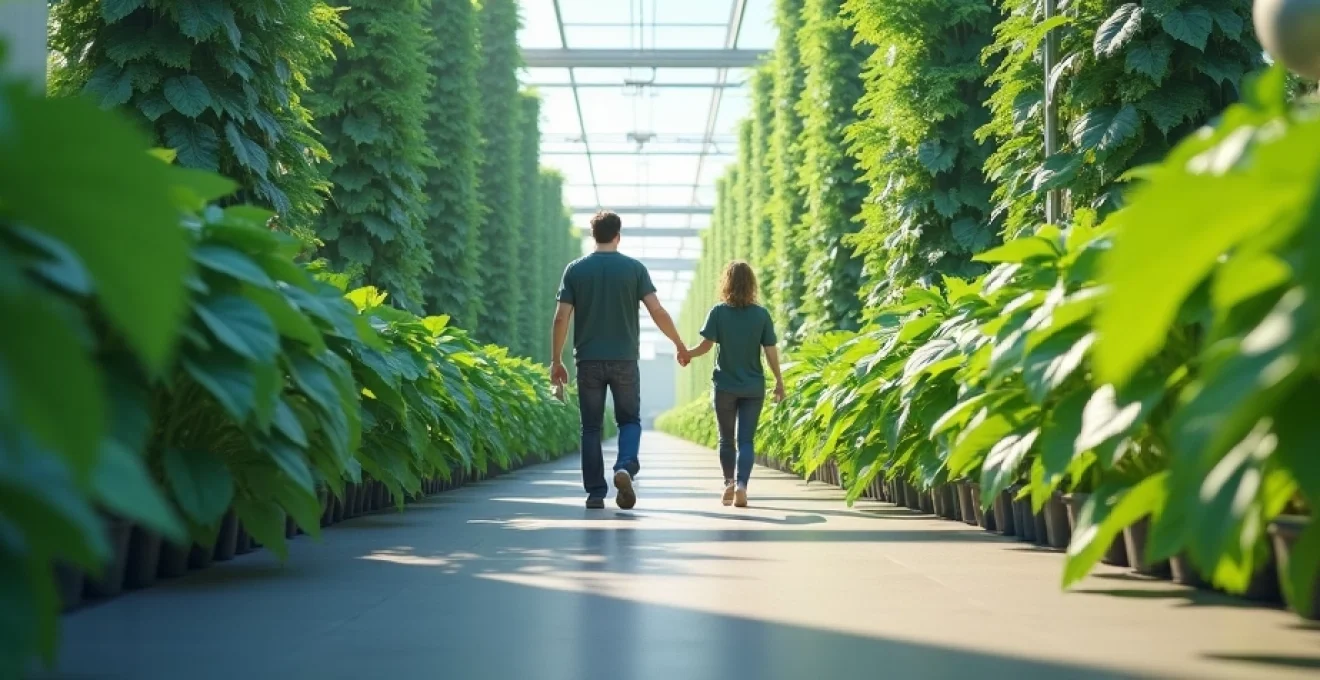
The precision control of atmospheric gases represents one of the most critical yet underexplored aspects of modern vertical farming operations. While traditional agriculture relies on ambient air conditions, controlled environment agriculture systems offer unprecedented opportunities to optimise carbon dioxide and oxygen levels for maximum plant productivity. Current research demonstrates that proper gas regulation can increase crop yields by 20-40% whilst simultaneously reducing energy consumption and operational costs. The integration of advanced monitoring technologies with automated climate control systems has transformed how commercial vertical farms approach atmospheric management, creating new possibilities for sustainable food production in urban environments.
Atmospheric gas dynamics in controlled environment agriculture systems
Understanding the complex interplay between carbon dioxide concentrations, oxygen levels, and plant physiology forms the foundation of successful vertical farming operations. Atmospheric gas dynamics in enclosed growing environments differ significantly from outdoor conditions, requiring sophisticated monitoring and control systems to maintain optimal growing conditions. The sealed nature of vertical farms creates unique challenges, as plant respiration and photosynthesis dramatically alter gas compositions throughout daily light cycles.
Modern vertical farming facilities typically maintain CO₂ concentrations between 800-1,500 parts per million during photosynthetic periods, substantially higher than ambient atmospheric levels of approximately 420 ppm. This enrichment strategy capitalises on the CO₂ fertilisation effect, where increased carbon dioxide availability directly enhances photosynthetic rates and biomass accumulation. However, achieving these elevated concentrations requires careful balance with ventilation systems to prevent dangerous accumulations that could harm both plants and workers.
CO₂ concentration optimisation for C3 and C4 plant photosynthesis
The photosynthetic pathways of different plant species determine their optimal CO₂ requirements, making species-specific gas management essential for maximising productivity. C3 plants, which include most leafy greens, herbs, and fruiting crops commonly grown in vertical farms, respond dramatically to CO₂ enrichment. These plants typically show peak photosynthetic rates at concentrations between 1,000-1,500 ppm, with diminishing returns beyond these levels.
C4 plants, such as certain grasses and some specialty crops, demonstrate different CO₂ response curves due to their more efficient carbon-concentrating mechanisms. Whilst C4 plants show less dramatic responses to CO₂ enrichment, they still benefit from moderately elevated concentrations, typically optimising at 600-900 ppm. The economic implications of these differences are substantial, as CO₂ supplementation costs can represent 15-25% of operational expenses in commercial vertical farms.
Oxygen partial pressure management in hydroponic root zones
Root zone oxygenation represents a critical but often overlooked aspect of vertical farming gas management. Hydroponic and aeroponic systems require dissolved oxygen levels of 6-8 mg/L in nutrient solutions to prevent root rot and maintain optimal nutrient uptake rates. Oxygen depletion in root zones can occur rapidly in warm conditions or with high plant densities, leading to anaerobic conditions that promote pathogenic bacteria and fungi.
Advanced vertical farming operations employ various oxygenation strategies, including venturi injectors, air stones, and recirculating pumps to maintain adequate dissolved oxygen levels. Temperature management plays a crucial role, as oxygen solubility decreases significantly with increasing water temperature. Maintaining nutrient solution temperatures between 18-22°C optimises oxygen availability whilst supporting healthy root development and nutrient absorption rates.
Vapour pressure deficit control through gas exchange monitoring
The relationship between atmospheric humidity, temperature, and gas exchange rates creates complex interactions that directly impact plant productivity and resource efficiency. Vapour pressure deficit (VPD) management requires precise coordination of ventilation systems with humidity control to maintain optimal transpiration rates. Proper VPD control, typically maintained between 0.8-1.2 kPa for most crops, enhances both CO₂ uptake and water use efficiency.
Gas exchange monitoring systems provide real-time feedback on plant physiological responses to environmental conditions, enabling dynamic adjustments to ventilation rates and humidity levels. This integrated approach to atmospheric management can improve water use efficiency by 20-30% whilst maintaining or increasing photosynthetic rates, demonstrating the interconnected nature of all environmental variables in vertical farming systems.
Diurnal gas fluctuation patterns in LED-Illuminated growing chambers
The artificial lighting cycles used in vertical farms create unique diurnal patterns of gas consumption and production that differ markedly from natural outdoor conditions. During photoperiods, rapid CO₂ depletion can occur within minutes of lights activation, particularly in densely planted systems with high leaf area indices. Automated gas injection systems must respond quickly to these fluctuations to prevent photosynthetic limitations.
Night-time respiratory patterns in LED-illuminated chambers also present management challenges, as plants continue consuming oxygen and producing CO₂ in darkness. Proper ventilation strategies during dark periods prevent CO₂ accumulation whilst maintaining humidity levels and preventing condensation. Advanced climate control systems now incorporate predictive algorithms that anticipate gas demand patterns based on crop type, growth stage, and environmental conditions, improving both efficiency and crop performance.
Advanced HVAC integration with precision gas monitoring technologies
The evolution of heating, ventilation, and air conditioning systems specifically designed for controlled environment agriculture has revolutionised gas management capabilities in modern vertical farms. These specialised HVAC systems integrate seamlessly with precision monitoring technologies to create responsive, efficient atmospheric control systems. The integration requires sophisticated sensors, automated control algorithms, and redundant safety systems to ensure consistent growing conditions whilst protecting both crops and personnel from potentially dangerous gas concentrations.
Modern vertical farming HVAC systems typically incorporate multiple zones with independent climate control, allowing different crops or growth stages to receive optimal atmospheric conditions simultaneously. This zonal approach maximises facility utilisation whilst minimising energy consumption through targeted environmental management. The cost implications are significant, with integrated HVAC and gas monitoring systems representing 25-35% of initial capital investment in commercial vertical farming facilities.
Vaisala CARBOCAP sensors for Real-Time CO₂ measurement
Vaisala CARBOCAP technology represents the gold standard for CO₂ monitoring in commercial vertical farming operations, offering accuracy levels of ±2 ppm and response times under 30 seconds. These sensors utilise infrared absorption technology specifically calibrated for the concentration ranges commonly used in controlled environment agriculture. The sensors provide continuous monitoring capabilities essential for maintaining optimal CO₂ levels during rapidly changing light and ventilation conditions.
The reliability and accuracy of Vaisala CARBOCAP sensors make them particularly valuable for safety monitoring in addition to crop optimisation. Worker safety protocols require continuous CO₂ monitoring to prevent dangerous accumulations that could pose health risks. Many jurisdictions now mandate fixed CO₂ detection systems in commercial growing facilities, making high-quality sensors not just beneficial but legally required for operation.
Apogee SO-110 oxygen sensors in nutrient film technique systems
Dissolved oxygen monitoring in hydroponic systems requires specialised sensors capable of operating reliably in nutrient-rich solutions with varying pH and electrical conductivity levels. The Apogee SO-110 oxygen sensor provides accurate measurements in these challenging conditions, with minimal drift and maintenance requirements. These sensors typically integrate directly with fertigation control systems to provide real-time feedback on root zone oxygen status.
The importance of dissolved oxygen monitoring becomes apparent when considering that oxygen depletion can occur within hours under high plant density conditions. Automated oxygenation systems triggered by SO-110 sensors can prevent costly crop losses whilst optimising energy consumption by operating pumps and air injection systems only when needed. This targeted approach to oxygen management can reduce energy costs by 15-20% compared to continuous oxygenation strategies.
Trolmaster environmental controllers for automated gas regulation
Trolmaster climate control systems provide comprehensive automation capabilities for managing complex interactions between CO₂ injection, ventilation, and environmental conditions. These controllers can simultaneously manage multiple environmental variables whilst maintaining optimal gas concentrations through sophisticated algorithms that account for crop growth stage, light intensity, and external weather conditions. The systems offer remote monitoring and control capabilities, essential for maintaining consistent growing conditions across multiple facilities or during off-hours operation.
The integration capabilities of Trolmaster systems extend beyond basic environmental control to include data logging, alarm management, and predictive maintenance scheduling. Predictive algorithms can anticipate gas demand based on historical patterns and planned operational changes, reducing the risk of environmental fluctuations that could impact crop quality or yield. This level of automation is particularly valuable for maintaining consistent production schedules required by commercial vertical farming operations.
Integration protocols between climate control and fertigation systems
The coordination between atmospheric gas management and nutrient delivery systems requires sophisticated integration protocols to ensure optimal plant growing conditions. Modern vertical farms employ integrated control systems that coordinate CO₂ injection timing with fertigation schedules to maximise nutrient uptake efficiency during peak photosynthetic periods. This synchronisation can improve fertiliser use efficiency by 10-15% whilst reducing waste and environmental impact.
Communication protocols between different system components typically utilise industrial networking standards such as Modbus or BACnet to ensure reliable data exchange and coordinated responses to changing conditions. Fail-safe mechanisms built into these integration protocols prevent dangerous gas accumulations or nutrient imbalances that could occur if individual system components malfunction. The complexity of these integrated systems requires specialised technical expertise for proper installation, commissioning, and maintenance.
Photosynthetic gas exchange mechanisms in vertical growing environments
The fundamental processes of photosynthesis and respiration in plants take on new significance in the controlled environments of vertical farms, where every aspect of atmospheric composition can be precisely managed. Understanding these mechanisms at both cellular and canopy levels enables optimisation strategies that maximise productivity whilst minimising resource consumption. The absence of natural air movement and fluctuating atmospheric conditions creates unique opportunities to study and optimise gas exchange processes that are impossible in traditional agricultural settings.
Photosynthetic efficiency in vertical farming systems depends heavily on the coordination between light intensity, CO₂ availability, and temperature management. Stomatal conductance responds dynamically to these environmental factors, with optimal conditions producing significantly higher gas exchange rates than can be achieved in outdoor growing conditions. Research indicates that properly managed vertical farming environments can achieve photosynthetic rates 30-50% higher than field-grown crops of the same species, primarily due to optimal CO₂ management and elimination of environmental stress factors.
The leaf-level gas exchange processes scale up to canopy-level effects that influence overall system design and management strategies. Dense planting arrangements common in vertical farming create complex microclimates where CO₂ depletion can occur rapidly in poorly ventilated areas. Understanding these canopy-level gas exchange patterns enables more effective air circulation system design and CO₂ injection strategies that ensure uniform atmospheric conditions throughout the growing area.
Proper atmospheric gas management in vertical farms can increase photosynthetic efficiency by up to 50% compared to outdoor growing conditions, primarily through optimised CO₂ availability and elimination of environmental stress factors.
The temporal patterns of gas exchange in LED-illuminated environments differ significantly from natural photoperiods, creating opportunities for novel growing strategies that maximise productivity. Some vertical farms experiment with extended photoperiods or split lighting schedules that maintain photosynthetic activity for longer periods, requiring careful coordination of CO₂ injection and ventilation systems. These advanced lighting strategies can increase daily photosynthetic carbon gain by 20-30%, though they require proportionally higher CO₂ consumption and more sophisticated atmospheric management systems.
Species-specific gas requirements for High-Yield vertical cultivation
Different crop species demonstrate vastly different responses to atmospheric gas management, making species-specific optimisation essential for maximising productivity and economic returns in commercial vertical farming operations. Leafy greens such as lettuce, spinach, and kale typically show the most dramatic responses to CO₂ enrichment, with optimal concentrations between 1,000-1,200 ppm producing yield increases of 25-40% compared to ambient conditions. These crops also demonstrate high sensitivity to oxygen levels in root zones, requiring dissolved oxygen concentrations above 6 mg/L for optimal growth rates.
Fruiting crops including tomatoes, peppers, and strawberries require more complex atmospheric management strategies due to their longer growing cycles and varying requirements during different growth stages. During vegetative growth phases, these crops benefit from CO₂ concentrations similar to leafy greens, but optimal levels may decrease during fruit development to prevent excessive vegetative growth at the expense of fruit production. The timing of CO₂ enrichment becomes critical, with many operations reducing concentrations by 200-300 ppm during fruiting phases to optimise resource allocation.
Herb production presents unique challenges for atmospheric management due to the diverse range of species commonly grown together in vertical farming systems. Basil, cilantro, parsley, and other culinary herbs each have slightly different optimal CO₂ concentrations and sensitivity to atmospheric fluctuations. Mixed cropping systems must balance these requirements to achieve acceptable productivity across all species, often resulting in compromise conditions that may not optimise any single crop but provide acceptable results for all.
The economic implications of species-specific gas management are substantial, with proper optimisation potentially increasing crop value by 30-50% through improved yields, quality, and consistency. However, the complexity of managing multiple species simultaneously requires sophisticated monitoring and control systems that can maintain different atmospheric conditions in separate growing zones. This level of control typically adds 20-25% to facility construction costs but can provide payback periods of 18-24 months through improved productivity and crop quality.
ROI analysis of CO₂ enrichment systems in commercial vertical farms
The financial justification for sophisticated CO₂ enrichment systems in commercial vertical farming operations requires careful analysis of both capital and operational costs against productivity improvements and crop quality benefits. Initial investment in comprehensive CO₂ management systems, including sensors, injection equipment, safety monitoring, and control systems, typically ranges from £15,000-30,000 per 1,000 square feet of growing space. These systems must demonstrate clear economic benefits through increased yields, improved crop quality, or reduced production costs to justify the investment.
Operational costs for CO₂ enrichment vary significantly based on local gas prices, facility design, and crop requirements. CO₂ consumption in commercial vertical farms typically ranges from 0.5-1.5 kg per kg of fresh produce, with costs representing 8-12% of total production expenses. The efficiency of CO₂ utilisation depends heavily on system design, with well-managed operations achieving significantly better gas utilisation rates than poorly designed systems. Sealed growing environments with minimal air exchange maximise CO₂ utilisation efficiency whilst reducing operational costs.
Productivity improvements from optimal CO₂ management typically range from 20-40% for most crops, with some species showing even greater responses under ideal conditions. These yield increases translate directly to improved revenue per square foot, often justifying CO₂ enrichment costs within 12-18 months of operation. Additionally, CO₂ enrichment often improves crop quality metrics such as shelf life, nutritional content, and visual appearance, enabling premium pricing that further enhances economic returns.
Commercial vertical farms implementing comprehensive CO₂ management systems typically see return on investment within 12-18 months through combined yield increases of 20-40% and improved crop quality enabling premium pricing.
The scalability of CO₂ enrichment systems provides additional economic advantages for larger operations, with per-unit costs decreasing significantly as facility size increases. Multi-zone facilities can implement sophisticated gas management strategies that optimise atmospheric conditions for different crops or growth stages simultaneously, maximising overall facility productivity. These economies of scale make CO₂ enrichment more economically attractive for commercial operations compared to smaller research or hobby facilities.
Troubleshooting gas imbalances in Multi-Tier growing operations
Multi-tier vertical farming systems present unique challenges for maintaining consistent atmospheric conditions across all growing levels, with gas imbalances commonly occurring due to thermal stratification, uneven air circulation, and varying crop densities between tiers. Thermal stratification naturally causes CO₂ concentrations to vary between upper and lower growing levels, as CO₂ is denser than air and tends to accumulate in lower areas. This phenomenon can create significant productivity differences between tiers if not properly managed through strategic air circulation and CO₂ injection placement.
Common symptoms of gas imbalances in multi-tier systems include uneven crop growth rates between levels, varying plant morphology, and differential susceptibility to physiological disorders such as tip burn or calcium deficiency. Upper tiers often experience CO₂ depletion during peak photosynthetic periods, whilst lower tiers may suffer from excessive CO₂ accumulation and oxygen depletion. Identifying these imbalances requires comprehensive monitoring systems with sensors positioned at multiple points within each growing tier.
Effective troubleshooting strategies for gas imbalances begin with detailed mapping of
atmospheric conditions using multi-point sensor networks and data logging systems that can identify patterns in gas distribution throughout the facility. Professional-grade monitoring systems should include at least two CO₂ sensors per growing tier, positioned at crop canopy level and in air circulation pathways to provide comprehensive coverage of atmospheric conditions.
Remediation strategies for gas imbalances typically involve adjusting air circulation patterns, repositioning CO₂ injection points, and implementing tier-specific environmental controls. Vertical air mixing systems can effectively address thermal stratification by creating controlled air movement between tiers, ensuring more uniform gas distribution. Some facilities employ dedicated circulation fans for each tier, whilst others utilise central air handling systems with zone-specific dampers to control airflow distribution. The investment in proper air circulation typically pays for itself through improved crop uniformity and reduced losses from physiological disorders.
Advanced troubleshooting approaches incorporate predictive maintenance protocols that identify potential gas imbalance issues before they affect crop productivity. Machine learning algorithms can analyse historical sensor data to predict when and where imbalances are likely to occur, enabling proactive adjustments to prevent problems. These predictive systems can reduce crop losses by 10-15% whilst improving overall facility efficiency through optimised resource utilisation and reduced emergency interventions.
Documentation and response protocols for gas imbalance incidents should include detailed troubleshooting flowcharts, sensor calibration schedules, and escalation procedures for emergency situations. Staff training on gas safety and emergency response becomes critical when working with elevated CO₂ concentrations and complex atmospheric management systems. Regular safety drills and equipment testing ensure rapid response capabilities that protect both crops and personnel during system malfunctions or extreme weather events that could affect facility atmospheric conditions.