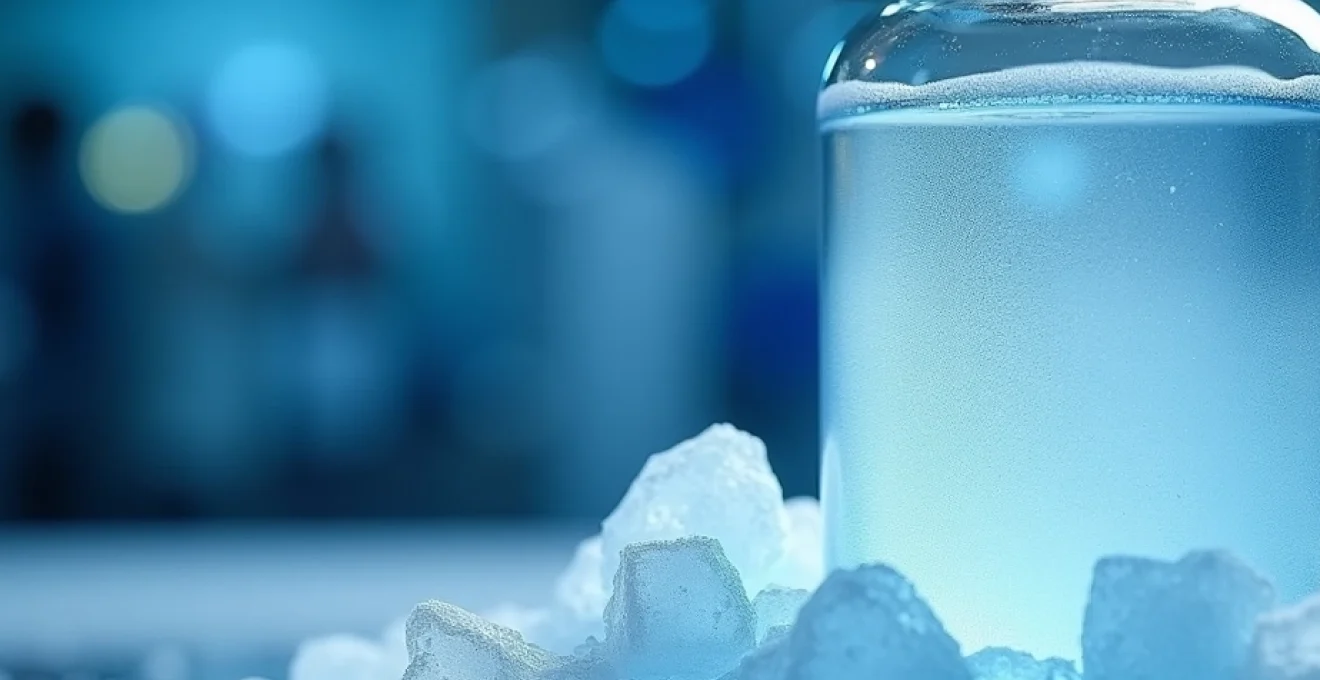
Liquid nitrogen has emerged as one of the most versatile cryogenic substances in modern applications, transforming industries from molecular gastronomy to aerospace manufacturing. This colourless, odourless liquid represents nitrogen in its condensed state, achieved through extreme cooling to temperatures below -195.8°C. The substance’s unique properties—including its inert nature, rapid phase transition, and exceptional cooling capacity—have made it indispensable across scientific research, industrial manufacturing, and culinary innovation.
The growing reliance on liquid nitrogen stems from its ability to provide precise temperature control, preserve biological materials, and enable manufacturing processes that would otherwise be impossible. As industries continue to push technological boundaries, understanding the comprehensive applications of this cryogenic fluid becomes increasingly important for professionals seeking to optimise their processes and explore new possibilities.
Cryogenic properties and production methods of liquid nitrogen
The fundamental characteristics that make liquid nitrogen so valuable begin with its molecular structure and thermodynamic properties. Nitrogen, constituting approximately 78% of Earth’s atmosphere, transforms into a liquid state when cooled below its boiling point under standard atmospheric conditions. This transformation unlocks a range of applications that leverage both its extremely low temperature and its tendency to rapidly expand when returning to gaseous form.
Fractional distillation process in air separation units
The production of liquid nitrogen relies on sophisticated fractional distillation processes within air separation plants. These facilities begin by compressing atmospheric air and removing impurities such as carbon dioxide, water vapour, and particulate matter. The purified air then undergoes a series of cooling and expansion cycles, following principles similar to refrigeration but operating at much more extreme temperatures and pressures.
During the distillation process, air is cooled progressively through multiple stages until its components begin to liquefy at their respective boiling points. Oxygen condenses first at approximately -183°C, followed by argon, and finally nitrogen at -195.8°C. This sequential separation allows for the isolation of high-purity liquid nitrogen, typically achieving purities exceeding 99.5% for industrial applications.
Boiling point characteristics at -195.8°C and atmospheric pressure
The precise boiling point of liquid nitrogen—minus 195.8°C at standard atmospheric pressure—represents a critical parameter for all applications. At this temperature, the substance exists in dynamic equilibrium between liquid and vapour phases, constantly evaporating and requiring proper containment to prevent loss. The enthalpy of vaporisation for liquid nitrogen measures approximately 199 kJ/kg, indicating the substantial amount of heat energy required to convert the liquid to gas.
This phase transition characteristic proves particularly valuable in cooling applications, as the evaporation process absorbs considerable heat from surrounding materials. When combined with the sensible heat capacity of nitrogen vapour (approximately 1 kJ/kg·K), the total cooling capacity can reach 415 kJ/kg when warming from -196°C to ambient temperature, making it exceptionally efficient for heat removal applications.
Leidenfrost effect and heat transfer mechanisms
The Leidenfrost effect plays a crucial role in liquid nitrogen applications, particularly in direct-contact cooling scenarios. When liquid nitrogen contacts surfaces significantly warmer than its boiling point, it forms an insulating vapour layer that initially reduces heat transfer efficiency. Understanding this phenomenon allows engineers to optimise contact methods, such as using spray systems or immersion techniques that overcome the vapour barrier.
Heat transfer coefficients in liquid nitrogen systems can vary dramatically depending on the application method. Conventional air blast freezers typically achieve heat transfer coefficients of 17 W/m²·K, whilst liquid nitrogen spray systems can reach 100-140 W/m²·K, demonstrating the superior cooling performance available through proper application techniques.
Storage requirements in dewar flasks and cryogenic vessels
Effective storage of liquid nitrogen demands specialised vessels designed to minimise heat transfer and maintain extremely low temperatures. Dewar flasks utilise vacuum insulation between double walls, combined with reflective surfaces and minimal thermal bridging, to achieve impressive insulation performance. Industrial storage systems employ similar principles but incorporate larger capacities and more robust materials suitable for continuous operation.
The volumetric expansion ratio of nitrogen—1:694 when transitioning from liquid to gas at 20°C—presents significant safety considerations for storage vessel design. Pressure relief systems must accommodate this massive volume change, whilst monitoring systems track temperature and pressure to ensure safe operating conditions. Modern cryogenic vessels incorporate multiple safety features, including pressure relief valves, rupture discs, and temperature monitoring systems.
Laboratory applications and analytical instrumentation
Scientific laboratories across disciplines rely heavily on liquid nitrogen for sample preparation, preservation, and analytical procedures. The substance’s ability to rapidly achieve and maintain cryogenic temperatures whilst remaining chemically inert makes it ideal for sensitive laboratory applications where sample integrity cannot be compromised.
Sample preservation in biobanks and tissue storage protocols
Biobanking facilities utilise liquid nitrogen storage systems to preserve biological samples for extended periods, often decades. These applications require maintaining samples at temperatures below -150°C to halt virtually all biological and chemical processes. Cryopreservation protocols typically involve controlled cooling rates to prevent ice crystal formation that could damage cellular structures.
Modern biobank facilities employ automated storage and retrieval systems that maintain samples in liquid nitrogen vapour phases, providing consistent temperatures whilst allowing for computerised inventory management. These systems can accommodate thousands of samples whilst maintaining precise temperature control and providing full traceability for regulatory compliance.
Cryogenic grinding techniques for material analysis
Cryogenic grinding represents a revolutionary approach to sample preparation, particularly for materials that become brittle at low temperatures. This technique proves especially valuable for processing spices, pharmaceuticals, and polymeric materials that generate excessive heat during conventional grinding processes. The extreme cold temperature makes normally tough materials brittle, enabling finer particle size reduction whilst preserving volatile compounds that might otherwise be lost.
The process typically involves pre-cooling both the grinding equipment and samples with liquid nitrogen before mechanical processing. This approach can achieve particle sizes below 100 micrometers whilst maintaining the original chemical composition of heat-sensitive materials, making it invaluable for analytical chemistry applications.
Flash-freezing methods in electron microscopy preparation
Electron microscopy sample preparation often requires rapid freezing to preserve cellular structures in their native state. Liquid nitrogen enables flash-freezing techniques that can cool samples at rates exceeding 10,000°C per second, preventing ice crystal formation that would obscure microscopic detail. These techniques are particularly important for studying dynamic cellular processes and maintaining the integrity of delicate biological structures.
Advanced preparation methods include plunge freezing, where samples are rapidly immersed in liquid nitrogen-cooled ethane or propane, achieving even faster cooling rates than direct liquid nitrogen contact. This approach proves essential for high-resolution electron microscopy studies requiring pristine sample preservation.
Temperature control in x-ray crystallography and NMR spectroscopy
Analytical instruments such as X-ray crystallographers and NMR spectrometers often require precise low-temperature control to enhance measurement sensitivity and reduce thermal noise. Liquid nitrogen cooling systems maintain detector temperatures at optimal levels, improving signal-to-noise ratios and enabling detection of weaker signals that might otherwise be masked by thermal interference.
In X-ray crystallography, cryocooling systems using liquid nitrogen allow for data collection from protein crystals that would otherwise suffer radiation damage at room temperature. The reduced thermal motion at cryogenic temperatures also improves diffraction quality, enabling higher-resolution structural determinations.
Industrial manufacturing and metal processing applications
Manufacturing industries have embraced liquid nitrogen for processes ranging from precision machining to materials testing. The substance’s ability to provide controlled cooling enables manufacturing techniques that improve product quality, extend tool life, and enable the production of components with enhanced properties.
Cryogenic deflashing in rubber and plastic component manufacturing
The rubber and plastics industry employs liquid nitrogen deflashing to remove excess material from moulded components efficiently. This process involves exposing parts to liquid nitrogen until they reach embrittlement temperature, then subjecting them to mechanical agitation that breaks away flash and excess material. The technique proves particularly effective for complex geometries where traditional trimming methods would be time-consuming or impractical.
Cryogenic deflashing offers several advantages over conventional methods, including reduced labour costs, improved consistency, and the ability to process multiple parts simultaneously. The process typically reduces deflashing time by 70-80% compared to manual methods whilst achieving superior surface finishes on the final components.
Shrink-fitting assembly processes in aerospace engineering
Aerospace manufacturers utilise liquid nitrogen for shrink-fitting operations that enable precise assembly of components with tight tolerances. By cooling inner components with liquid nitrogen, their dimensions contract sufficiently to allow insertion into outer components, creating interference fits that provide exceptional strength and precision once thermal equilibrium is restored.
This technique proves particularly valuable for assembling bearing races, turbine components, and other critical aerospace parts where traditional press-fitting might induce stress concentrations or dimensional distortions. The process enables interference fits that would be impossible to achieve through conventional mechanical assembly methods.
Liquid nitrogen cooling systems in semiconductor fabrication
Semiconductor manufacturing processes increasingly rely on liquid nitrogen cooling for both processing and testing applications. During thermal cycling tests, liquid nitrogen enables rapid temperature changes that simulate years of operational stress in compressed timeframes. This accelerated testing proves essential for validating component reliability before market introduction.
In fabrication processes, liquid nitrogen cooling systems maintain precise temperatures during critical steps such as plasma etching and ion implantation. The superior temperature control achievable with liquid nitrogen systems contributes to improved yield rates and enhanced device performance characteristics.
Metal heat treatment and cryogenic hardening procedures
Metallurgical applications of liquid nitrogen include deep cryogenic treatment processes that enhance material properties beyond what conventional heat treatment can achieve. By cooling metals to liquid nitrogen temperatures and below, manufacturers can complete martensitic transformations that increase hardness, improve dimensional stability, and extend component service life.
Research indicates that cryogenic treatment can increase tool steel hardness by 2-8 HRC points whilst improving wear resistance by up to 300%. These improvements result from the precipitation of fine carbides and the completion of austenite-to-martensite transformation that remains incomplete in conventional heat treatment processes.
Culinary techniques and molecular gastronomy applications
The culinary world has embraced liquid nitrogen as a tool for creating innovative textures, presentations, and flavour experiences impossible through conventional cooking methods. Professional chefs utilise its rapid freezing capabilities to create unique dishes that challenge traditional culinary boundaries whilst maintaining exceptional taste and nutritional value.
In molecular gastronomy, liquid nitrogen enables the creation of foams, gels, and crystalline structures that provide novel sensory experiences. The substance’s ability to instantly freeze ingredients whilst maintaining their cellular structure allows chefs to preserve flavours and textures in ways that conventional freezing cannot match. Popular applications include instantly frozen cocktails, nitrogen-infused ice creams with impossibly smooth textures, and dramatic tableside presentations that create theatrical dining experiences.
Beyond theatrical applications, liquid nitrogen proves valuable for practical culinary techniques such as flash-freezing delicate herbs to preserve their colour and flavour, creating crispy textures on foods that would otherwise become soggy, and enabling precise temperature control during cooking processes. The rapid cooling prevents large ice crystal formation, maintaining food structure whilst achieving unique textural contrasts.
Professional kitchens implementing liquid nitrogen techniques require specialised training and safety protocols due to the extreme temperatures involved. Proper ventilation systems and handling procedures ensure chef safety whilst maintaining the creative possibilities that have made liquid nitrogen a signature element in high-end culinary establishments.
Medical and healthcare cryotherapy procedures
Medical applications of liquid nitrogen span from routine dermatological procedures to advanced surgical techniques and biological preservation. The healthcare sector relies on liquid nitrogen’s precise temperature control and tissue-specific effects to treat various conditions whilst minimising patient discomfort and recovery time.
Dermatological applications represent the most common medical use of liquid nitrogen, particularly for removing benign skin lesions, warts, and precancerous growths. The cryotherapy process involves controlled application of liquid nitrogen to targeted tissues, causing cellular destruction through ice crystal formation and thermal shock. Treatment times typically range from 5-30 seconds, depending on lesion size and depth, with most procedures requiring no anaesthesia.
Advanced medical applications include cryosurgery for internal organ procedures, where liquid nitrogen-cooled probes enable precise tissue destruction whilst preserving surrounding healthy structures. This minimally invasive approach reduces surgical trauma, shortens recovery times, and often eliminates the need for traditional open surgical procedures. Cryoablation techniques prove particularly effective for treating certain cardiac arrhythmias, liver tumours, and prostate conditions.
Pain management applications utilise liquid nitrogen’s numbing effects to provide temporary relief for chronic conditions. Sports medicine practitioners employ cryotherapy chambers where patients are exposed to liquid nitrogen vapour at temperatures approaching -150°C for short periods, purportedly reducing inflammation and accelerating recovery from athletic injuries.
The precise temperature control achievable with liquid nitrogen systems enables medical professionals to target specific tissue types whilst preserving surrounding healthy structures, revolutionising minimally invasive treatment options.
Safety protocols and hazard management in liquid nitrogen handling
Working safely with liquid nitrogen requires comprehensive understanding of its hazards and implementation of appropriate safety measures. The primary risks include severe cold burns from direct contact, asphyxiation in poorly ventilated spaces, and pressure-related hazards from rapid vapourisation in confined spaces.
Personal protective equipment for liquid nitrogen handling includes insulated gloves rated for cryogenic temperatures, safety glasses or face shields, closed-toe shoes, and loose-fitting clothing that won’t trap liquid nitrogen against skin. Proper ventilation systems are essential in work areas, as nitrogen gas can displace oxygen and create asphyxiation hazards without warning, since nitrogen is odourless and colourless.
- Never seal liquid nitrogen containers completely, as pressure build-up from evaporation can cause explosive failure
- Use appropriate transfer equipment designed for cryogenic fluids to prevent spillage and ensure controlled handling
- Maintain emergency procedures including eyewash stations and emergency ventilation systems
- Store liquid nitrogen containers in well-ventilated areas away from confined spaces
- Train personnel in proper handling techniques and emergency response procedures
Transport regulations for liquid nitrogen vary by jurisdiction but typically require proper labelling, approved containers, and documentation of quantities being moved. Commercial transportation must comply with hazardous materials regulations, whilst smaller quantities for laboratory use may have simplified requirements depending on local regulations.
Emergency response procedures should address potential scenarios including large spills, personnel exposure, and equipment failures. Oxygen monitoring systems prove essential in enclosed work areas, with alarm systems triggering when oxygen levels drop below safe thresholds. Regular safety training ensures all personnel understand proper procedures and can respond appropriately to emergency situations.
Effective liquid nitrogen safety programmes combine proper equipment, comprehensive training, and robust emergency procedures to enable safe utilisation of this powerful cryogenic resource across diverse applications.
Storage facility design considerations include adequate ventilation capacity, pressure relief systems, and materials compatibility with cryogenic temperatures. Regular inspection schedules for storage vessels, transfer lines, and safety equipment help identify potential issues before they become hazardous situations, ensuring continued safe operation of liquid nitrogen systems.