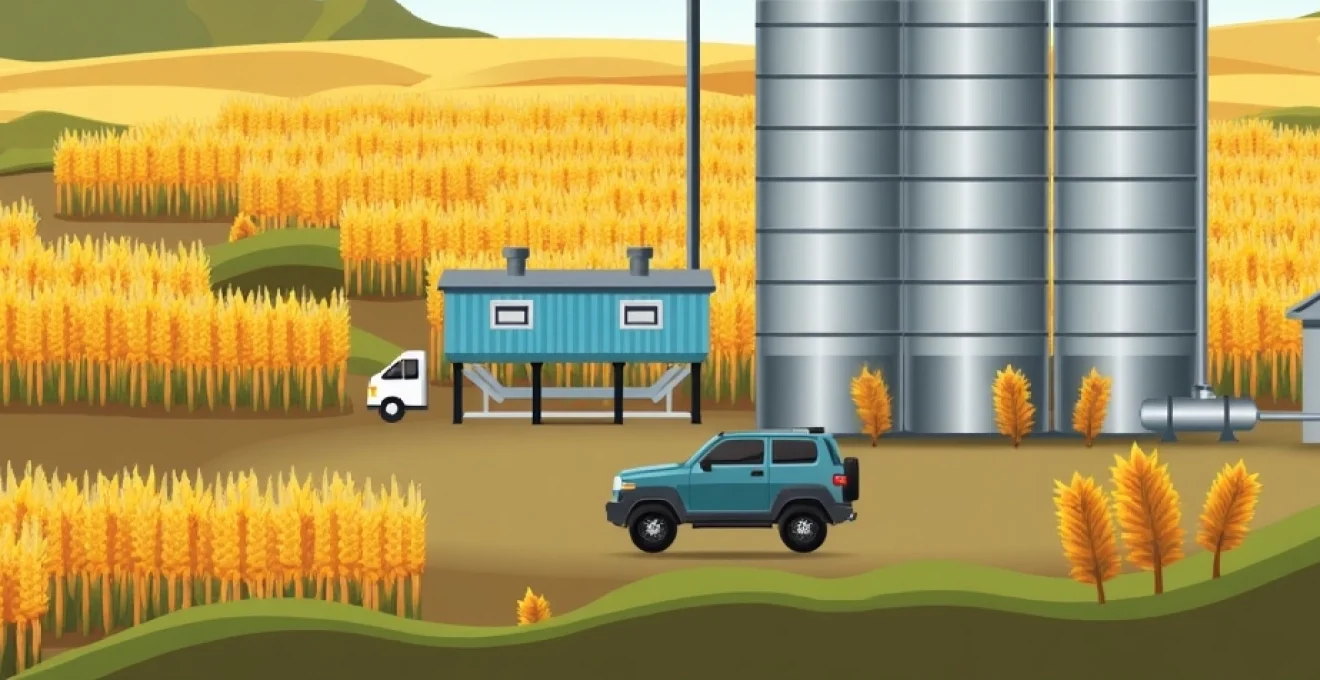
Modern agriculture faces mounting pressure to preserve harvested crops without relying on synthetic chemicals that can harm both human health and environmental systems. Modified-atmosphere packaging (MAP) and fumigation techniques represent a revolutionary approach to crop protection, utilising naturally occurring gases to create hostile environments for pests whilst maintaining product quality. This technology manipulates atmospheric compositions by adjusting oxygen, carbon dioxide, and nitrogen concentrations to levels that effectively eliminate storage pests through biological mechanisms rather than toxic compounds.
The global food security challenge intensifies as post-harvest losses account for approximately 25% of annual crop production, with storage pests alone responsible for economic damages exceeding £70 billion worldwide. Traditional fumigation methods using phosphine and methyl bromide face increasing restrictions due to environmental concerns and pest resistance development. Modified-atmosphere treatments offer a sustainable alternative that addresses these challenges whilst preserving nutritional quality and extending shelf life naturally.
Modified-atmosphere packaging fundamentals and gas composition mechanisms
Modified-atmosphere packaging fundamentally alters the gaseous environment surrounding stored crops by precisely controlling the concentrations of oxygen, carbon dioxide, and nitrogen. The technology operates on the principle that most storage pests require specific atmospheric conditions to survive, particularly adequate oxygen levels for aerobic respiration. By manipulating these conditions, MAP creates an environment that gradually eliminates pest populations without introducing chemical residues.
The effectiveness of modified-atmosphere treatments depends on achieving and maintaining specific gas ratios throughout the storage period. Optimal conditions typically require oxygen concentrations below 2%, carbon dioxide levels between 15-60%, and nitrogen concentrations above 95% in certain applications. These precise combinations trigger physiological stress responses in target pests whilst remaining safe for stored products and human operators.
Controlled atmosphere storage with nitrogen and carbon dioxide ratios
Nitrogen-enriched atmospheres create hypoxic conditions that prevent normal aerobic metabolism in storage pests. Research demonstrates that maintaining nitrogen concentrations above 97% for specific durations achieves complete mortality across multiple pest species. The inert properties of nitrogen make it particularly suitable for organic crop storage, where synthetic fumigants are prohibited. Commercial nitrogen generation systems can produce the required purity levels economically for large-scale storage facilities.
Carbon dioxide applications operate through multiple mechanisms, including respiratory acidosis and metabolic disruption. Concentrations between 30-60% CO2 prove effective against most grain storage pests, with higher temperatures accelerating the process. The dual action of oxygen displacement and direct toxicity makes carbon dioxide particularly effective for rapid pest elimination, though it requires careful monitoring to prevent adverse effects on seed viability.
Oxygen reduction techniques for insect mortality in grain storage
Oxygen depletion strategies focus on reducing atmospheric oxygen to levels incompatible with insect survival whilst maintaining grain quality. Target oxygen concentrations typically range from 0.1% to 1%, achieved through nitrogen flushing or carbon dioxide injection combined with hermetic sealing. The gradual oxygen reduction allows for complete penetration throughout grain masses, ensuring uniform treatment effectiveness.
The biological basis for oxygen reduction effectiveness lies in disrupting insect respiratory systems and cellular energy production. Hypoxic conditions prevent ATP synthesis and cause metabolic dysfunction, leading to gradual mortality across all developmental stages. This approach proves particularly effective against species that have developed resistance to conventional fumigants , providing a valuable alternative for integrated pest management programmes.
Phosphine-free fumigation systems using argon and helium
Noble gas applications represent an emerging frontier in atmospheric fumigation technology. Argon and helium create inert atmospheres that eliminate oxygen whilst remaining completely non-toxic to humans and environmentally benign. These systems operate by displacing oxygen to levels below 0.5%, causing rapid insect mortality through anoxia. The high cost of noble gases currently limits their application to high-value crops and specialised storage scenarios.
Argon-based systems demonstrate particular promise for museum preservation and pharmaceutical storage applications where chemical residues pose unacceptable risks. The density properties of argon allow for effective atmosphere stratification in vertical storage systems, reducing gas consumption whilst maintaining treatment efficacy. Recent technological advances in gas recovery and recycling systems are making noble gas fumigation increasingly economically viable.
Temperature and humidity optimisation in MAP applications
Environmental parameters significantly influence modified-atmosphere treatment effectiveness. Temperature elevation from 25°C to 35°C can reduce treatment duration by 50-70%, as higher temperatures accelerate insect metabolism and gas uptake rates. However, excessive temperatures may compromise seed viability or product quality, requiring careful balance between treatment efficacy and crop preservation.
Humidity control plays a crucial role in maintaining grain quality during extended atmospheric treatments. Relative humidity levels between 60-65% prove optimal for most applications , preventing both desiccation damage and moisture-related deterioration. Advanced climate control systems integrate temperature and humidity monitoring with atmospheric composition management, enabling precise environmental control throughout treatment cycles.
Biological mechanisms of insect control through atmospheric modification
The biological foundation of modified-atmosphere pest control centres on disrupting essential physiological processes that insects require for survival. Unlike chemical fumigants that target specific biochemical pathways, atmospheric modification affects multiple biological systems simultaneously, making resistance development significantly more difficult. Understanding these mechanisms enables optimisation of treatment protocols for maximum effectiveness whilst minimising product damage risks.
Insect respiratory systems evolved to function within narrow atmospheric parameters, making them vulnerable to compositional changes. When oxygen concentrations drop below critical thresholds, insects cannot maintain adequate ATP production for cellular functions. Simultaneously, elevated carbon dioxide levels disrupt pH balance and enzyme activity, creating a dual stress scenario that overwhelms natural adaptation mechanisms.
Respiratory inhibition in stored product pests via hypoxic conditions
Hypoxic stress triggers cascading physiological failures in storage pests by disrupting oxygen transport and cellular respiration. Insects respond to reduced oxygen availability by opening spiracles more frequently, which accelerates water loss and compounds stress effects. The combination of respiratory distress and dehydration proves particularly lethal, especially when maintained for extended periods exceeding 72 hours.
Research indicates that different insect species exhibit varying tolerance levels to hypoxic conditions. Beetle species generally demonstrate greater resistance compared to moth larvae , requiring longer exposure periods or higher gas concentrations for complete elimination. This variability necessitates species-specific treatment protocols and comprehensive pest identification before implementing atmospheric treatments.
Target pest species response: sitophilus granarius and rhyzopertha dominica
Sitophilus granarius (granary weevil) exhibits moderate susceptibility to modified-atmosphere treatments, with adults requiring 97-99% nitrogen concentrations maintained for 8-11 days at 25°C for complete mortality. Larvae and pupae demonstrate slightly greater resistance, necessitating extended treatment periods or elevated temperatures. The species’ ability to reduce metabolic activity during stress conditions contributes to its relative tolerance.
Rhyzopertha dominica (lesser grain borer) shows greater sensitivity to atmospheric modification, achieving 100% mortality within 4-6 days under optimal conditions. Adult beetles prove more vulnerable than immature stages, with eggs demonstrating the highest resistance levels.
The species’ smaller size and higher metabolic rate contribute to faster gas uptake and more rapid physiological disruption compared to larger beetle species.
Metabolic disruption pathways in tribolium castaneum under Low-Oxygen environments
Tribolium castaneum (red flour beetle) experiences severe metabolic dysfunction when exposed to oxygen concentrations below 1%. The species attempts to compensate through anaerobic respiration pathways, leading to lactic acid accumulation and cellular pH disruption. This metabolic shift proves unsustainable for more than 48-72 hours, resulting in systematic organ failure and mortality.
Biochemical analysis reveals that T. castaneum exhibits altered amino acid metabolism under hypoxic stress, with decreased NADPH production affecting antioxidant defence systems. The accumulation of reactive oxygen species accelerates cellular damage, whilst impaired protein synthesis disrupts vital enzyme functions. These combined effects create irreversible physiological damage that ensures treatment permanence.
Developmental stage susceptibility: larvae, pupae, and adult mortality rates
Developmental stage significantly influences susceptibility to atmospheric modification treatments. Adult insects typically demonstrate the highest sensitivity due to their active metabolism and respiratory demands. Active stages require constant energy production for movement, reproduction, and maintenance functions, making them vulnerable to respiratory disruption.
Pupal stages exhibit intermediate susceptibility, as their reduced metabolic activity provides some protection against atmospheric stress. However, the developmental processes occurring during pupation require consistent oxygen supply, making extended hypoxic exposure ultimately fatal. Egg stages generally prove most resistant , often requiring doubled treatment durations or enhanced gas concentrations for complete elimination.
Commercial implementation technologies and equipment systems
Modern commercial implementation of modified-atmosphere fumigation requires sophisticated equipment systems capable of precise gas control and environmental monitoring. Industrial-scale applications demand robust infrastructure that can maintain atmospheric compositions across large storage volumes whilst ensuring operator safety and treatment uniformity. The technology has evolved from simple sealed container applications to complex automated systems managing entire warehouse facilities.
Equipment selection depends on storage capacity, crop type, and treatment frequency requirements. Small-scale operations may utilise portable gas generation units and flexible enclosure systems, whilst large grain terminals invest in permanent infrastructure with integrated monitoring and control systems. The capital investment typically ranges from £50,000 for basic systems to over £500,000 for comprehensive facility-wide installations.
Safety considerations play a paramount role in system design, as modified atmospheres pose asphyxiation risks to personnel. Modern installations incorporate multiple safety features including atmospheric monitoring, emergency ventilation systems, and personnel protection protocols. Automated systems reduce human exposure risks whilst improving treatment consistency and documentation requirements for regulatory compliance.
Natural gas generation methods for agricultural applications
On-site gas generation eliminates the logistical challenges and costs associated with transported compressed gases. Modern generation systems produce treatment-grade nitrogen, carbon dioxide, or custom gas mixtures using ambient air and electrical power. These systems typically achieve payback periods of 2-3 years for facilities conducting regular atmospheric treatments, whilst providing operational independence from external suppliers.
The reliability of on-site generation systems has improved significantly with advances in membrane technology and process automation. Modern units operate continuously with minimal maintenance requirements, producing consistent gas purities exceeding 99% when properly maintained. Integration with storage facility management systems enables automated treatment scheduling and gas consumption optimisation.
On-site nitrogen production using membrane separation technology
Membrane separation systems utilise selective permeability to separate nitrogen from compressed air, producing high-purity nitrogen suitable for atmospheric treatments. The technology operates continuously, requiring only electrical power and periodic membrane replacement every 5-7 years. Production capacities range from 10 cubic metres per hour for small facilities to over 1,000 cubic metres per hour for large operations.
The economic advantages of membrane nitrogen generation become apparent with regular usage patterns. Systems typically achieve nitrogen costs below £0.10 per cubic metre compared to £0.40-0.60 for delivered compressed gas. Energy consumption averages 0.4-0.6 kWh per cubic metre of nitrogen produced , making operational costs predictable and manageable for budget planning purposes.
Catalytic carbon dioxide scrubbing systems for grain silos
Carbon dioxide scrubbing technology removes CO2 from storage atmospheres to create ultra-low oxygen environments without introducing external gases. These systems utilise catalytic absorption to reduce CO2 concentrations below 0.1%, effectively creating nitrogen-enriched atmospheres through selective gas removal. The approach proves particularly valuable for hermetic storage applications where external gas injection is impractical.
Advanced scrubbing systems incorporate regenerable sorbents that capture and release carbon dioxide in controlled cycles. This technology enables CO2 concentration management throughout treatment periods, allowing operators to maintain optimal atmospheric compositions for specific pest species or treatment protocols. The systems typically consume 0.2-0.3 kWh per cubic metre of gas processed.
Pressure swing adsorption units in Post-Harvest storage facilities
Pressure swing adsorption (PSA) technology produces high-purity nitrogen through selective adsorption of oxygen and other gases from compressed air. PSA units achieve nitrogen purities exceeding 99.5% with production efficiencies superior to membrane systems for large-scale applications. The technology operates through automated cycles that alternately pressurise and depressurise adsorption chambers containing molecular sieves.
Modern PSA systems incorporate variable production controls that adjust output based on demand, improving energy efficiency during periods of reduced consumption.
These systems typically require higher capital investment than membrane units but offer superior performance for continuous operation scenarios and large-volume applications.
Maintenance requirements include periodic molecular sieve replacement every 10-12 years and routine valve servicing.
Crop-specific application protocols and treatment duration
Treatment protocols vary significantly based on crop characteristics, moisture content, and storage objectives. Cereal grains typically require 7-14 days of atmospheric treatment for complete pest elimination, whilst high-value crops like coffee or cocoa may utilise shorter exposure periods with enhanced gas concentrations to preserve flavour compounds. Protocol development considers pest species identification, infestation levels, and quality preservation requirements.
Seed crops demand particular attention to treatment parameters, as excessive exposure can reduce germination rates and vigour. Research indicates that wheat seed maintains 95% germination after 10 days in 98% nitrogen atmosphere at 25°C, whilst extended exposure or higher temperatures may cause significant viability losses. Treatment protocols for seed crops typically utilise shorter durations with elevated temperatures to accelerate pest mortality whilst preserving viability.
Organic certification requirements influence protocol selection, as certified organic products must avoid synthetic fumigants entirely. Modified-atmosphere treatments align perfectly with organic standards, providing effective pest control without compromising certification status. Documentation requirements for organic applications include detailed treatment records, gas purity certificates, and pest monitoring data to satisfy inspection requirements.
Monitoring systems track atmospheric composition, temperature, and humidity throughout treatment cycles to ensure protocol compliance and treatment effectiveness. Advanced facilities utilise wireless sensor networks that provide real-time data on storage conditions across multiple zones. This technology enables immediate response to parameter deviations and optimises treatment outcomes through precise environmental control.
Quality assurance protocols include pre-treatment and post-treatment sampling to document pest elimination effectiveness and product quality preservation. Statistical sampling methods ensure representative monitoring across storage volumes, whilst laboratory analysis confirms treatment success and identifies any quality changes. These protocols provide the documentation necessary for insurance claims, regulatory compliance, and customer assurance programmes.
Economic analysis and environmental impact assessment of MAP fumigation
Economic evaluation of modified-atmosphere fumigation systems requires comprehensive analysis of capital costs, operational expenses, and potential savings from reduced product losses and chemical fumigant elimination. Initial system costs typically range from £25-75 per tonne of storage capacity, depending on automation levels and gas generation requirements. Operating costs average £1.20-2.80 per tonne of treated product, comparing favourably with chemical fumigation costs of £2.50-4.50 per tonne when including labour, safety equipment, and disposal requirements.
Return on investment calculations must consider reduced insurance premiums, elimination of chemical handling costs, and potential premium pricing for chemical-free products. Many facilities achieve payback periods of 3-5 years, with subsequent treatments providing significant cost savings compared to traditional methods. The elimination of chemical purchase, storage, and disposal costs represents substantial ongoing savings that improve long-term profitability projections.
Environmental impact assessments consistently favour modified-atmosphere treatments over chemical alternatives. The technology produces zero chemical residues, eliminates groundwater contamination risks, and reduces atmospheric emissions of toxic compounds. Life cycle analyses indicate that electrical energy consumption for gas generation produces significantly lower environmental impact than chemical fumigant production and disposal processes.
Carbon footprint calculations show that nitrogen generation typically produces 0.3-0.5 kg CO2 equivalent per cubic metre of nitrogen, compared to 2.1-3.2 kg CO2 equivalent for chemical fumigant production and application. The energy required for atmospheric treatments often derives from renewable sources, further reducing environmental impact.
Facilities utilising solar or wind power for gas generation achieve near-zero carbon footprint for crop protection activities.
Regulatory compliance advantages include elimination of fumigant applicator certification requirements, reduced safety training needs, and simplified waste disposal procedures. Many jurisdictions offer environmental incentives for adopting non-chemical pest control technologies, including tax credits, grant funding, and expedited permitting processes. These regulatory advantages contribute to the overall economic attractiveness of modified-atmosphere systems for forward-thinking agricultural enterprises.