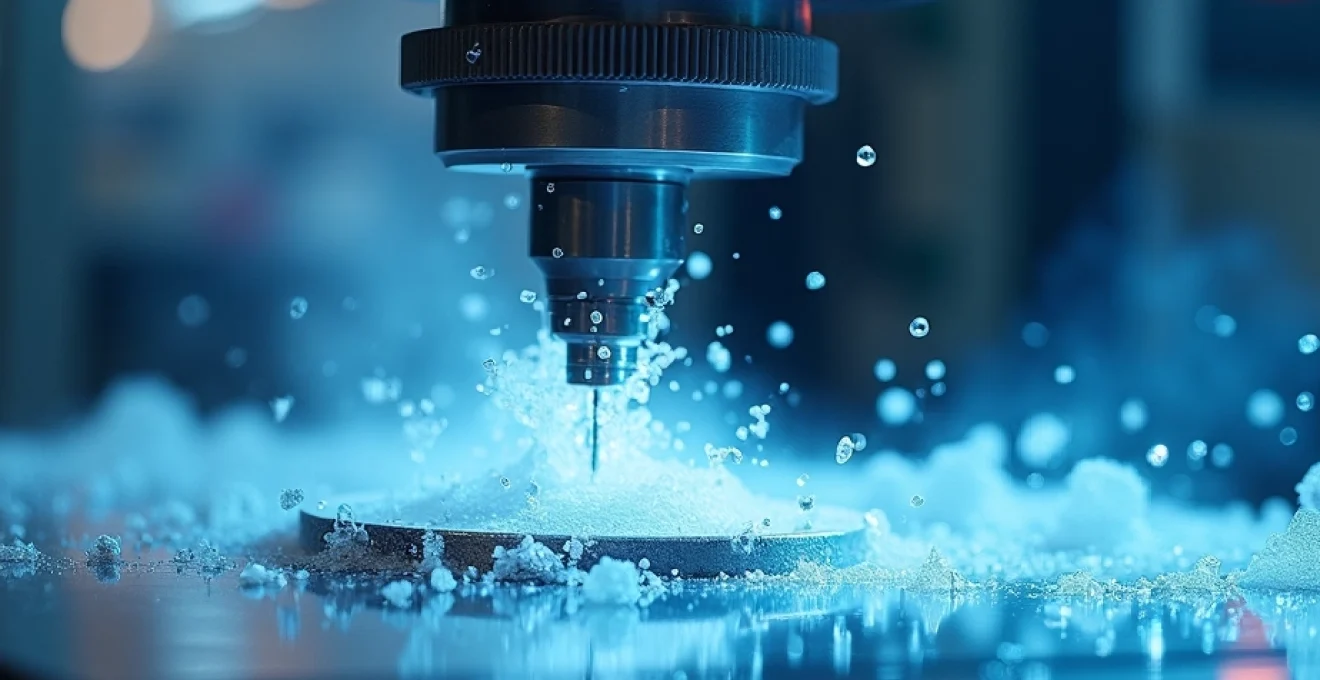
Manufacturing precision has reached unprecedented levels in modern industry, yet the quest for even greater accuracy and efficiency continues to drive technological innovation. Liquid nitrogen cooling represents one of the most significant breakthroughs in advanced machining, offering manufacturers a pathway to achieve superior dimensional tolerances while dramatically extending tool life. This cryogenic approach transforms traditional metal cutting operations by introducing extreme temperature control that fundamentally alters the physics of material removal processes. The aerospace, automotive, and medical device industries have embraced nitrogen cooling as essential technology for producing components that demand exceptional precision and surface integrity.
Nitrogen cooling fundamentals in CNC machining operations
Cryogenic machining with liquid nitrogen operates on principles that differ markedly from conventional coolant systems. The process involves delivering nitrogen at temperatures as low as -196°C directly to the cutting zone, creating controlled thermal environments that enable precision manufacturing previously unattainable. This extreme cooling capability allows manufacturers to machine materials that were once considered difficult or impossible to process with traditional methods.
Cryogenic temperature management through liquid nitrogen delivery systems
Effective nitrogen delivery requires sophisticated systems designed to maintain consistent flow rates and temperatures throughout the machining process. Modern cryogenic systems utilise precision nozzles positioned strategically around the cutting tool to ensure optimal coverage of the workpiece surface. The delivery mechanism typically includes flow control valves, pressure regulators, and specialised tubing capable of handling extreme temperature differentials without compromising system integrity.
Temperature management becomes critical when considering the rapid phase transitions that occur during nitrogen application. The liquid nitrogen undergoes immediate vaporisation upon contact with heated surfaces, creating gas cushions that facilitate chip evacuation while providing continuous cooling. This phase change phenomenon requires careful consideration of nozzle positioning and flow dynamics to maximise cooling efficiency whilst minimising nitrogen consumption.
Heat dissipation mechanisms in High-Speed metal cutting processes
The heat generation during high-speed machining creates significant challenges for maintaining dimensional accuracy and tool performance. Cryogenic cooling addresses these challenges through multiple heat dissipation mechanisms that work simultaneously to control cutting zone temperatures. The primary mechanism involves direct heat absorption by the liquid nitrogen, which possesses exceptional heat capacity and thermal conductivity properties.
Convective heat transfer occurs as the nitrogen gas expands and flows away from the cutting zone, carrying thermal energy with it. This convection process becomes particularly effective when combined with proper nozzle design that creates controlled gas flow patterns. Additionally, the extreme temperature differential between the nitrogen and the heated workpiece creates rapid heat extraction rates that far exceed those achievable with conventional coolants.
Thermal shock prevention during rapid temperature transitions
Rapid temperature changes can induce thermal stress in both workpieces and cutting tools, potentially leading to dimensional distortion or tool failure. Nitrogen cooling systems address this concern through controlled application techniques that manage temperature gradients effectively. The key lies in understanding the thermal properties of specific materials and adjusting nitrogen flow rates accordingly.
Workpiece materials with high thermal expansion coefficients require particularly careful temperature management to prevent warping or cracking. Thermal shock prevention strategies include gradual temperature reduction protocols and strategic cooling zone positioning that maintains uniform temperature distribution across the workpiece surface.
Nitrogen flow rate optimisation for different machining applications
Flow rate optimisation depends on multiple factors including material properties, cutting parameters, and desired surface finish quality. Research indicates that optimal nitrogen consumption typically ranges from 1-3 litres per minute for most machining applications, though specific requirements vary significantly based on workpiece geometry and tool configuration. Higher flow rates don’t necessarily produce better results, as excessive nitrogen can create turbulent conditions that reduce cooling efficiency.
Material-specific optimisation becomes essential when machining different alloys. Titanium alloys, for instance, require higher flow rates due to their low thermal conductivity, whilst aluminium applications typically achieve optimal results with moderate nitrogen consumption. The challenge lies in balancing cooling effectiveness with operational costs, as nitrogen consumption directly impacts overall manufacturing economics.
Precision enhancement through controlled thermal environments
The precision benefits of nitrogen cooling extend far beyond simple temperature reduction. By creating stable thermal environments, cryogenic systems enable manufacturers to achieve dimensional tolerances that would be impossible using conventional cooling methods. This enhanced precision stems from multiple factors that work synergistically to improve overall machining accuracy.
Workpiece dimensional stability under cryogenic conditions
Thermal expansion represents one of the primary sources of dimensional error in precision machining operations. Nitrogen cooling minimises these errors by maintaining consistent workpiece temperatures throughout the machining cycle. The extreme cooling capability of liquid nitrogen can reduce workpiece temperatures by 200°C or more compared to ambient conditions, dramatically reducing thermal expansion effects.
Studies demonstrate that dimensional stability improvements of 40-60% are commonly achieved when implementing nitrogen cooling systems. This enhancement becomes particularly significant when machining large components or performing operations that generate substantial heat. The consistent thermal environment created by nitrogen cooling allows manufacturers to achieve tolerances within ±0.001mm on complex geometries that would previously require secondary finishing operations.
Surface finish quality improvements in titanium alloy machining
Titanium alloys present unique machining challenges due to their low thermal conductivity and work-hardening characteristics. Conventional coolants often prove inadequate for managing the heat generation and chip formation issues associated with titanium processing. Nitrogen cooling transforms titanium machining by preventing the thermal conditions that lead to work hardening and built-up edge formation on cutting tools.
The superior cooling capability of liquid nitrogen maintains cutting edge sharpness throughout extended machining cycles, resulting in surface finish improvements of 30-50% compared to conventional coolant systems. This enhancement eliminates many secondary finishing requirements, reducing overall manufacturing time and costs whilst improving component quality.
Chip formation control in inconel 718 processing
Inconel 718 machining presents particular challenges due to the material’s tendency to form long, stringy chips that can interfere with cutting operations and compromise surface quality. Nitrogen cooling addresses these challenges by creating thermal conditions that promote controlled chip fracture and evacuation. The rapid cooling effect makes the material more brittle at the point of chip formation, leading to shorter, more manageable chip segments.
The gas expansion that occurs as nitrogen vaporises provides additional chip evacuation assistance, helping to clear the cutting zone of debris that could otherwise interfere with tool performance. This combination of improved chip formation and enhanced evacuation results in more stable machining processes and superior surface finish quality on Inconel components.
Geometric tolerance maintenance during extended machining cycles
Long machining cycles present particular challenges for maintaining geometric tolerances due to cumulative thermal effects and tool wear progression. Nitrogen cooling systems address both issues simultaneously by maintaining stable thermal conditions whilst extending tool life. The consistent cooling throughout the entire machining cycle prevents the thermal drift that commonly occurs with conventional coolant systems.
Tool wear progression becomes more predictable under cryogenic conditions, allowing manufacturers to develop more accurate tool life models and maintenance schedules. This predictability enables better quality control and reduces the risk of producing out-of-tolerance components due to unexpected tool failure or excessive wear.
Cutting tool performance optimisation with nitrogen applications
The impact of nitrogen cooling on cutting tool performance extends across all major tool types and applications. Research consistently demonstrates that cryogenic cooling can extend tool life by 50-150% depending on the specific application and material combination. This dramatic improvement stems from multiple mechanisms that work together to protect cutting edges and maintain tool geometry throughout extended machining operations.
Carbide insert wear reduction in aerospace component manufacturing
Carbide inserts represent the workhorse of modern machining operations, particularly in aerospace manufacturing where precision and reliability are paramount. Nitrogen cooling enhances carbide performance through several mechanisms that address the primary wear modes affecting these tools. The extreme cooling capability prevents the thermal softening that leads to accelerated crater wear, whilst the controlled chip formation reduces mechanical stress on cutting edges.
Aerospace component manufacturing benefits significantly from these improvements, as the extended tool life enables longer unattended machining operations on critical components. The consistency of tool performance under cryogenic conditions also improves process predictability, allowing manufacturers to optimise cutting parameters for maximum efficiency whilst maintaining strict quality standards.
Testing data from aerospace manufacturers indicates that nitrogen cooling can extend carbide insert life by up to 200% when machining titanium alloys commonly used in aircraft structures. This improvement translates directly into reduced tooling costs and improved manufacturing efficiency for high-value aerospace components.
Tool edge retention in hardened steel machining operations
Hardened steel machining presents unique challenges for cutting tool performance, as the high hardness levels create severe mechanical and thermal stress on tool edges. Traditional cooling methods often prove inadequate for managing these stresses, leading to rapid tool degradation and poor surface finish quality. Nitrogen cooling transforms hardened steel machining by creating thermal conditions that preserve tool edge geometry and sharpness.
The rapid heat extraction provided by liquid nitrogen prevents the thermal cycling that commonly causes tool edge chipping and micro-fractures. This protection becomes particularly important when machining tool steels and bearing steels that require exceptional surface quality and dimensional accuracy. Manufacturers report tool life improvements of 75-125% when implementing nitrogen cooling for hardened steel applications.
Ceramic tool longevity enhancement through controlled cooling
Ceramic cutting tools offer excellent performance for high-speed machining applications but can be sensitive to thermal shock and rapid temperature changes. Nitrogen cooling enhances ceramic tool performance by providing controlled cooling that minimises thermal stress whilst maintaining the temperature stability required for optimal cutting performance.
The key to successful ceramic tool application lies in managing the thermal environment to prevent the sudden temperature changes that can cause tool fracture. Nitrogen cooling systems achieve this through precise flow control that maintains consistent temperatures without creating thermal shock conditions. This controlled environment enables ceramic tools to achieve their full performance potential whilst providing extended service life.
Diamond-coated tool performance in composite material processing
Composite material machining presents unique challenges due to the abrasive nature of reinforcing fibres and the thermal sensitivity of matrix materials. Diamond-coated tools offer excellent abrasion resistance but require careful thermal management to prevent coating delamination and maintain cutting edge integrity. Nitrogen cooling provides the precise thermal control necessary for optimal diamond-coated tool performance.
The controlled cooling environment created by nitrogen systems prevents the thermal conditions that lead to coating failure whilst maintaining the low temperatures required for effective composite machining. This combination results in dramatically extended tool life and improved surface quality on composite components, making diamond-coated tools more economically viable for production applications.
Industrial implementation strategies for nitrogen cooling systems
Successful implementation of nitrogen cooling technology requires comprehensive planning and consideration of multiple factors that affect both performance and economics. The initial investment in cryogenic cooling systems can be substantial, but the long-term benefits typically justify the costs through improved productivity and reduced tooling expenses. Manufacturing facilities must evaluate their specific applications and requirements to develop effective implementation strategies.
The infrastructure requirements for nitrogen cooling include reliable nitrogen supply systems, specialised delivery equipment, and safety systems designed to handle cryogenic materials safely. Many facilities choose to implement nitrogen cooling incrementally, starting with high-value applications where the benefits are most apparent. This approach allows manufacturers to gain experience with the technology whilst demonstrating its value to stakeholders.
Operator training represents a critical component of successful implementation, as cryogenic systems require different handling procedures and safety protocols compared to conventional coolant systems. The training program should cover nitrogen handling safety, system operation, troubleshooting procedures, and emergency response protocols. Proper training ensures safe operation whilst maximising the performance benefits of the cooling system.
Integration with existing manufacturing systems requires careful planning to ensure compatibility with current machining centres and tooling systems. Modern CNC machines can typically accommodate cryogenic cooling systems with minimal modifications, though some applications may require specialised nozzle mounting systems or modified tool holders. The integration process should include thorough testing and validation to ensure optimal performance.
Comparative analysis: nitrogen cooling versus traditional flood coolants
The performance comparison between nitrogen cooling and traditional flood coolants reveals significant advantages for cryogenic systems across multiple metrics. Traditional coolants typically operate at ambient temperatures and rely primarily on convective heat transfer and lubrication effects. Whilst these systems provide adequate performance for many applications, they cannot match the thermal management capabilities of nitrogen cooling systems.
Environmental considerations increasingly favour nitrogen cooling systems due to their minimal environmental impact compared to conventional coolants that require disposal and recycling processes.
Tool life comparisons consistently demonstrate the superiority of nitrogen cooling across diverse applications. Studies indicate that nitrogen cooling can extend tool life by 50-200% depending on the specific application, whilst conventional coolants typically provide modest improvements over dry machining. The thermal management capability of nitrogen systems enables higher cutting speeds and feeds, resulting in improved productivity alongside extended tool life.
Surface finish quality represents another area where nitrogen cooling demonstrates clear advantages. The controlled thermal environment and improved chip evacuation provided by cryogenic systems result in superior surface finishes that often eliminate secondary finishing requirements. This improvement becomes particularly significant when machining aerospace and medical components that demand exceptional surface quality.
Maintenance requirements differ significantly between the two systems, with nitrogen cooling requiring minimal maintenance compared to conventional coolant systems that need regular filtration, replacement, and disposal. The simplified maintenance requirements of nitrogen systems reduce operational complexity whilst eliminating the environmental concerns associated with coolant disposal.
Cost-benefit assessment and ROI calculations for manufacturing facilities
The economic evaluation of nitrogen cooling systems requires comprehensive analysis of both direct and indirect costs and benefits. Direct costs include nitrogen consumption, system acquisition, installation, and maintenance expenses. Indirect benefits encompass improved productivity, reduced tooling costs, enhanced quality, and eliminated coolant-related expenses. Most manufacturing facilities achieve positive return on investment within 12-24 months of implementation.
Nitrogen consumption represents the primary ongoing operational cost, typically ranging from £0.50 to £2.00 per hour depending on flow rates and local nitrogen prices. This cost must be weighed against the savings achieved through extended tool life, improved productivity, and reduced quality issues. Tooling cost reductions alone often justify the nitrogen consumption expenses, particularly for high-value cutting tools used in aerospace and medical applications.
Productivity improvements stem from higher cutting speeds, reduced tool change frequency, and elimination of coolant-related downtime. These factors combine to increase overall equipment effectiveness whilst reducing per-part manufacturing costs. Facilities processing high-value components typically achieve the greatest economic benefits due to the significant impact of improved quality and reduced scrap rates.
| Cost Factor | Traditional Coolant | Nitrogen Cooling | Difference |
|---|---|---|---|
| Tool Life Extension | Baseline | 50-200% increase | Significant savings |
| Coolant Costs | £500-2000/month | £300-800/month | 40-60% reduction |
| Maintenance | High | Minimal | 70% reduction |
| Environmental Compliance | £1000-5000/year | £0 | Complete elimination |
Quality improvements provide additional economic benefits through reduced scrap rates and elimination of secondary finishing operations. Components machined with nitrogen cooling often achieve surface finishes and dimensional tolerances that meet final specifications without additional processing. This capability reduces manufacturing time whilst improving overall process efficiency.
The long-term economic benefits of nitrogen cooling extend beyond direct cost savings to include improved competitiveness and capability expansion. Manufacturers implementing cryogenic cooling often find they can accept contracts for components that were previously beyond their capabilities, opening new market opportunities and revenue streams. The technology enables production of higher-precision components whilst maintaining competitive pricing structures.