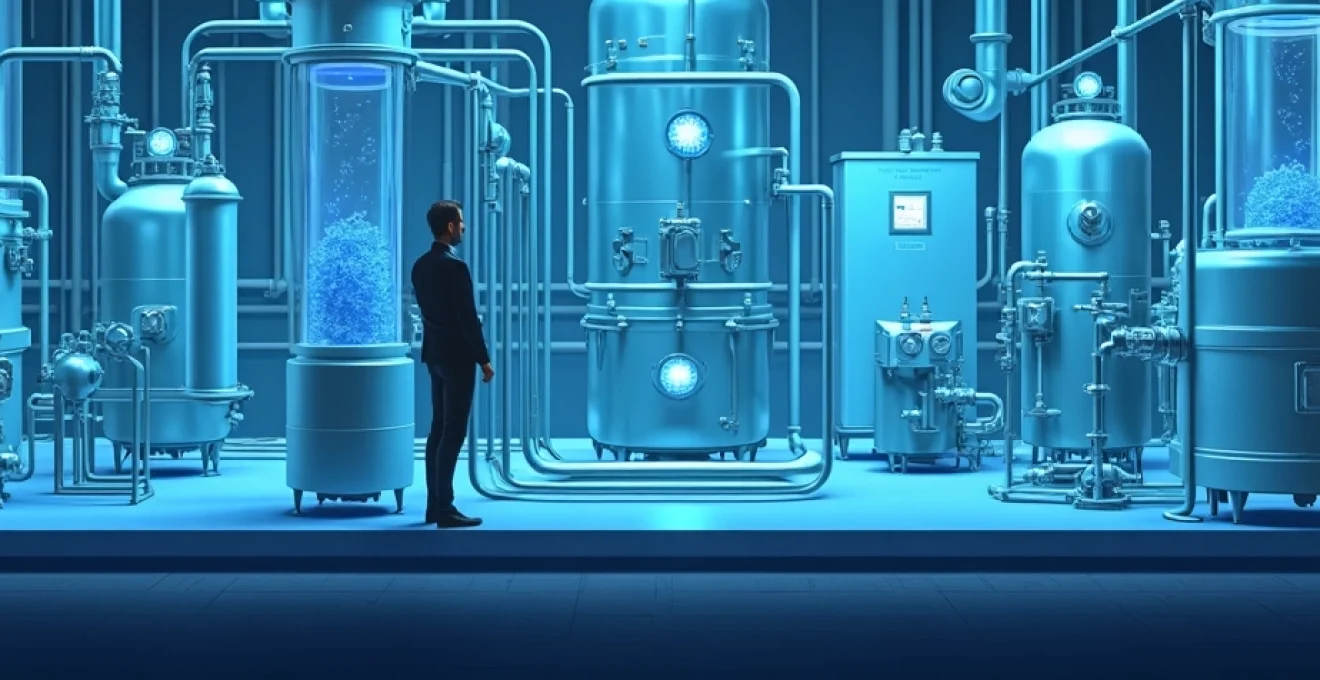
Pressure swing adsorption technology has revolutionised on-site nitrogen generation across countless industrial applications, transforming how businesses approach their gas supply requirements. This sophisticated separation process harnesses the molecular-level differences between atmospheric gases to deliver high-purity nitrogen with remarkable energy efficiency. By cycling between pressurisation and depressurisation phases, PSA systems continuously extract nitrogen from compressed air whilst removing oxygen and other unwanted components through selective adsorption mechanisms.
The growing demand for reliable, cost-effective nitrogen supply has positioned PSA technology as the preferred solution for industries ranging from pharmaceuticals to food packaging. Unlike traditional delivery methods that rely on external suppliers and costly logistics, PSA nitrogen generators provide complete autonomy over gas production, enabling facilities to generate precisely the quantity and purity required for their specific applications. This technological advancement represents a fundamental shift towards sustainable, economically viable nitrogen generation that adapts seamlessly to varying operational demands.
Pressure swing adsorption fundamentals and molecular separation principles
The theoretical foundation of PSA nitrogen generation rests upon selective adsorption principles that exploit the distinct molecular characteristics of atmospheric gases. At standard conditions, air comprises approximately 78% nitrogen, 21% oxygen, and trace amounts of other gases. The PSA process capitalises on the preferential adsorption of certain molecules onto specially engineered adsorbent materials, effectively concentrating nitrogen whilst removing unwanted components.
This separation mechanism operates through a combination of thermodynamic and kinetic factors that determine which molecules interact most strongly with the adsorbent surface. The process achieves remarkable efficiency by alternating between high-pressure adsorption phases and low-pressure regeneration cycles, creating a continuous production stream without requiring external heating or chemical additives.
Zeolite carbon molecular sieve structure and Nitrogen-Oxygen selectivity
Carbon molecular sieves represent the cornerstone technology enabling effective nitrogen-oxygen separation in PSA systems. These highly engineered materials feature precisely controlled pore structures that create size-exclusion barriers for different gas molecules. The microporous architecture of CMS materials typically exhibits pore diameters between 3-5 angstroms, allowing selective passage based on molecular dimensions.
The manufacturing process for carbon molecular sieves involves carbonisation of organic precursors under carefully controlled conditions, followed by activation procedures that develop the optimal pore structure. This results in materials with exceptionally high surface areas, often exceeding 800 m²/g, providing abundant sites for molecular interactions whilst maintaining the structural integrity necessary for repeated cycling operations.
Van der waals forces and adsorption equilibrium dynamics
The fundamental driving force behind gas separation in PSA systems stems from Van der Waals interactions between gas molecules and adsorbent surfaces. These weak intermolecular forces create preferential binding sites for specific molecules, with oxygen typically exhibiting stronger adsorption characteristics than nitrogen on carbon molecular sieves. The strength of these interactions varies with pressure, temperature, and molecular structure, enabling the cyclical process that characterises PSA operation.
Adsorption equilibrium relationships govern the capacity and selectivity performance of PSA systems. Under elevated pressures, the adsorbent material reaches saturation with preferentially adsorbed species, whilst pressure reduction rapidly releases these molecules, regenerating the adsorbent for subsequent cycles. This equilibrium behaviour determines both the purity achievable and the energy requirements for the separation process.
Kinetic diameter differences between N2 and O2 molecules
The molecular kinetic diameters of nitrogen and oxygen provide the physical basis for size-based separation in carbon molecular sieves. Nitrogen molecules exhibit a kinetic diameter of approximately 3.64 angstroms, whilst oxygen molecules measure slightly smaller at 3.46 angstroms. However, the separation mechanism relies not solely on size exclusion but on the combination of molecular dimensions and adsorption affinity.
This seemingly counterintuitive relationship—where the larger molecule (nitrogen) passes through more readily—results from the quadrupole moment and polarisability differences between the gases. Oxygen’s higher quadrupole moment creates stronger interactions with the carbon surface, leading to preferential adsorption despite its smaller molecular size. This phenomenon enables effective separation even when size differences are minimal.
Langmuir isotherm models in PSA nitrogen generation
Mathematical modelling of PSA processes relies heavily on Langmuir isotherm equations to predict adsorption behaviour under varying conditions. These models describe the relationship between gas pressure, temperature, and adsorbed quantity, providing essential data for system design and optimisation. The Langmuir approach assumes monolayer coverage and uniform adsorption sites, offering reasonable approximations for many PSA applications.
Advanced PSA design incorporates multi-component Langmuir models that account for competitive adsorption between nitrogen, oxygen, and trace components. These sophisticated calculations enable precise prediction of product purity, recovery rates, and energy consumption, facilitating optimal system configuration for specific applications. The resulting models guide decisions regarding cycle timing, pressure levels, and adsorbent selection to achieve desired performance targets.
Multi-column PSA system architecture and process engineering
Contemporary PSA nitrogen generators employ sophisticated multi-column configurations that ensure continuous product delivery whilst maximising separation efficiency. The fundamental architecture typically incorporates twin towers operating in counter-phase cycles, though more complex arrangements utilising three or more columns provide enhanced performance for demanding applications. Each column contains carefully stratified beds of adsorbent materials optimised for specific separation duties within the overall process sequence.
The engineering design of PSA systems requires careful consideration of mass transfer limitations, pressure drop characteristics, and heat management to achieve optimal performance. Column dimensions, packing density, and flow distribution systems all influence the effectiveness of the separation process. Modern installations incorporate advanced computational fluid dynamics modelling to optimise internal configurations and minimise energy consumption whilst maximising nitrogen recovery.
Twin-tower configuration with automatic valve sequencing
The standard twin-tower PSA configuration represents the most widely adopted architecture for nitrogen generation applications. This design employs two identical adsorption columns that alternate between production and regeneration phases, ensuring uninterrupted nitrogen supply. Sophisticated valve sequencing systems coordinate the switching operations with precision timing that maximises both product purity and recovery efficiency.
Automatic valve control systems utilise programmable logic controllers to manage the complex timing sequences required for optimal PSA operation. These systems monitor pressure, flow, and purity parameters continuously, adjusting cycle timing to maintain consistent product quality under varying operating conditions. The integration of advanced sensors and control algorithms enables real-time optimisation of the separation process.
Pressurisation and production phase optimisation
The pressurisation phase initiates each PSA cycle by introducing compressed air into the freshly regenerated adsorption column. This stage requires careful control of pressure rise rates to prevent mechanical stress on the adsorbent bed whilst ensuring uniform gas distribution throughout the column volume. Optimal pressurisation strategies balance the competing requirements of rapid cycle times and adsorbent longevity.
During the production phase, nitrogen-enriched gas exits the column whilst oxygen and other impurities concentrate within the adsorbent bed. The duration and pressure level of this phase directly influence product purity and recovery rates. Advanced control systems continuously monitor product quality and adjust phase timing to maintain specified purity levels whilst maximising nitrogen yield.
Blowdown and purge cycle timing controls
Regeneration of saturated adsorbent beds requires carefully orchestrated blowdown and purge sequences that remove adsorbed impurities without compromising future separation performance. The blowdown phase rapidly reduces column pressure, enabling desorption of previously captured molecules. Timing control for this phase must balance rapid regeneration against excessive nitrogen losses that reduce overall system efficiency.
Purge gas flow, typically derived from a portion of the product nitrogen stream, assists in removing desorbed impurities from the column. The quantity and timing of purge flow significantly impact both regeneration effectiveness and nitrogen recovery rates. Optimised purge strategies employ variable flow rates that adapt to changing feedstock conditions and product requirements.
Equalisation steps and pressure recovery mechanisms
Pressure equalisation between columns during PSA cycling recovers valuable nitrogen that would otherwise be lost during blowdown operations. This process involves connecting the high-pressure column completing its production phase with the low-pressure column beginning its next cycle. The resulting pressure balance reduces energy consumption whilst improving nitrogen recovery rates.
Advanced PSA systems may incorporate multiple equalisation steps to further enhance efficiency. These intermediate pressure recovery mechanisms can improve nitrogen yield by 5-10% compared to simple two-step processes. The complexity of multi-step equalisation requires sophisticated control systems but delivers significant economic benefits in large-scale applications where nitrogen consumption is substantial.
Atlas copco NGP+ and parker balston PSA system designs
Leading manufacturers have developed proprietary PSA system designs that optimise performance for specific applications. These commercial systems incorporate decades of engineering refinement and operational experience to deliver reliable, efficient nitrogen generation. Modular construction approaches enable scalable installations that adapt to changing production requirements whilst maintaining consistent product quality.
Contemporary PSA designs emphasise energy efficiency through improved adsorbent utilisation, optimised cycle timing, and enhanced heat management. These systems typically achieve nitrogen recovery rates exceeding 40% whilst maintaining product purities up to 99.999%. Advanced monitoring and diagnostic capabilities enable predictive maintenance strategies that maximise system availability and minimise operational costs.
Adsorbent materials and performance characteristics
The selection and performance characteristics of adsorbent materials fundamentally determine the efficiency and capability of PSA nitrogen generation systems. Modern installations utilise carefully engineered adsorbents that exhibit exceptional selectivity, capacity, and durability under demanding operational conditions. These materials must withstand thousands of pressure cycles whilst maintaining consistent separation performance across varying feedstock compositions and environmental conditions.
Adsorbent performance evaluation encompasses multiple criteria including adsorption capacity, selectivity ratios, regeneration characteristics, and mechanical stability. The optimal material selection depends upon specific application requirements such as desired nitrogen purity, production capacity, and operating pressure ranges. Advanced material characterisation techniques enable precise matching of adsorbent properties to process requirements, maximising both performance and economic efficiency.
Type 13X and 5A zeolite molecular sieves comparison
Zeolite molecular sieves represent one category of adsorbent materials employed in PSA nitrogen generation, though carbon molecular sieves more commonly serve this application. Type 13X zeolites feature larger pore openings (approximately 10 angstroms) compared to 5A variants (5 angstroms), influencing their separation characteristics and adsorption capacities. These crystalline aluminosilicate materials offer high thermal stability and resistance to moisture-induced degradation.
The comparison between different zeolite types reveals important performance trade-offs. Type 13X materials typically exhibit higher nitrogen adsorption capacities but lower selectivity ratios compared to 5A zeolites. However, for nitrogen generation applications, carbon molecular sieves generally outperform zeolite alternatives due to their superior nitrogen-oxygen selectivity and reduced sensitivity to trace contaminants in the feedstock air.
Carbon molecular sieve selectivity ratios and capacity
Carbon molecular sieves achieve nitrogen-oxygen separation through a combination of molecular sieving and equilibrium selectivity mechanisms. High-quality CMS materials typically demonstrate nitrogen-oxygen selectivity ratios ranging from 3:1 to 10:1, depending upon operating conditions and material specifications. These ratios directly correlate with achievable nitrogen purities and recovery rates in PSA applications.
The adsorption capacity of CMS materials varies significantly with pressure and temperature conditions. At typical PSA operating pressures (6-8 bar gauge), quality carbon molecular sieves exhibit oxygen adsorption capacities of 15-25 mL/g under standard conditions. This capacity, combined with favourable selectivity characteristics, enables efficient nitrogen separation with minimal energy consumption per unit of product gas .
UOP and CECA adsorbent technologies
Leading adsorbent manufacturers have developed specialised carbon molecular sieve products optimised for nitrogen generation applications. These advanced materials incorporate proprietary manufacturing processes that precisely control pore structure development and surface chemistry. The resulting products demonstrate enhanced performance characteristics including improved selectivity, increased capacity, and extended operational lifetimes.
Comparative evaluation of different CMS products reveals significant performance variations that impact overall system economics. Premium adsorbent materials may cost 20-30% more than standard grades but deliver corresponding improvements in nitrogen recovery and product purity. The selection of appropriate adsorbent technology requires careful analysis of total cost of ownership including initial investment, replacement frequency, and operational efficiency.
Regeneration temperature requirements and cycle life
Carbon molecular sieves employed in PSA nitrogen generation operate through pressure-driven adsorption and desorption cycles that do not require thermal regeneration. This ambient-temperature operation represents a significant advantage over temperature swing adsorption processes, eliminating heating energy requirements and associated thermal cycling stresses. Room-temperature regeneration enables rapid cycle times and reduces system complexity.
The cycle life expectancy of quality CMS materials exceeds 10 years under normal operating conditions, with gradual capacity decline occurring over extended periods. Factors influencing adsorbent lifetime include feedstock contamination levels, moisture exposure, and operational pressure cycling frequency. Proper feedstock preparation and system design can maximise adsorbent life, minimising replacement costs and operational disruptions.
Advanced carbon molecular sieves can withstand over 100,000 pressure cycles whilst maintaining separation performance within acceptable limits, making them exceptionally reliable for continuous nitrogen generation applications.
Energy efficiency metrics and power consumption analysis
Energy efficiency represents a critical performance parameter for PSA nitrogen generation systems, directly impacting operational costs and environmental sustainability. Modern installations typically consume 0.4-0.8 kWh per cubic metre of nitrogen produced, depending upon purity requirements and system design optimisation. This energy consumption primarily stems from compressed air generation, with additional power required for control systems and auxiliary equipment.
The relationship between nitrogen purity and energy consumption follows an exponential curve, with higher purities requiring disproportionately more energy input. Systems producing 99% nitrogen typically consume 20-30% less energy than those generating 99.9% purity gas. This relationship emphasises the importance of matching nitrogen purity specifications precisely to application requirements, avoiding unnecessary energy waste through over-specification. Careful purity selection can significantly reduce operational costs whilst maintaining product quality.
Advanced energy efficiency optimisation incorporates variable-speed compressor drives, heat recovery systems, and intelligent control algorithms that adapt operation to changing demand patterns. These technologies can reduce energy consumption by 15-25% compared to conventional fixed-speed installations. Real-time monitoring systems track energy performance metrics, enabling continuous improvement initiatives and rapid identification of efficiency degradation.
| Nitrogen Purity (%) | Energy Consumption (kWh/m³) | Typical Applications | Recovery Rate (%) |
| 95-97 | 0.35-0.45 | Fire prevention, tyre inflation | 55-65 |
| 99.0-99.5 | 0.45-0.60 | Food packaging, plastics | 45-55 |
| 99.9-99.99 | 0.60-0.80 | Electronics, pharmaceuticals | 35-45 |
| 99.999+ | 0.80-1.20 | Laboratory, analytical | 25-35 |
The air factor represents another crucial efficiency metric, indicating the volume of compressed air required to produce one unit of nitrogen product. High-performance PSA systems achieve air factors of 2.5-4.0, meaning they consume 2.5-4 cubic metres of compressed air for each cubic metre of nitrogen generated. This metric directly relates to compressor sizing requirements and operational energy costs, making it essential for system selection and economic evaluation.
Optimised PSA nitrogen generators can achieve overall electrical efficiency ratings exceeding 85% when integrated with premium efficiency air compressors and sophisticated control systems.
Industrial applications and nitrogen purity requirements
The versatility of PSA nitrogen generation technology enables its deployment across numerous industrial sectors, each with distinct purity requirements and operational constraints. Understanding these application-specific needs guides proper system selection and configuration to achieve optimal performance whilst minimising operational costs. Modern industries increasingly recognise nitrogen generation as essential infrastructure, comparable to electricity or compressed air systems.
Food and beverage manufacturing represents one of the largest application areas for PSA nitrogen systems, utilising nitrogen for packaging, preservation, and processing operations. These applications typically require nitrogen purities ranging from 97% to 99.9%, depending upon product sensitivity and shelf-life requirements. Modified atmosphere packaging relies on precise nitrogen concentrations to extend product freshness whilst maintaining optimal presentation characteristics.
Electronics manufacturing demands exceptionally high nitrogen purities, often exceeding 99.999%, for wave soldering, selective soldering, and semiconductor processing applications. These stringent requirements necessitate careful system design and monitoring to prevent oxidation damage to sensitive components. The economic impact of contamination in electronics production makes reliable, high-purity nitrogen generation critical for maintaining product quality and yield rates.
Pharmaceutical and chemical industries utilise nitrogen for blanketing, purging, and inerting operations that protect valuable products from oxidative degradation. These applications typically require purities between 99% and 99.99%, with pharmaceutical production often demanding additional certification and validation requirements. The regulatory compliance aspects of pharmaceutical nitrogen generation require documentation of purity levels and system performance validation according to Good Manufacturing Practice guidelines.
| Industry Sector | Typical Purity Range | Primary Applications | Critical Performance Factors |
| Food & Beverage | 97-99.9% | MAP packaging, tank blanketing | Consistency, food safety certification |
| Electronics | 99.99-99.999% | Wave soldering, SMT assembly | Ultra-high purity, low moisture |
| Pharmaceutical | 99-99.99% | API blanketing, tablet coating | GMP compliance, traceability |
| Automotive | 95-99% | Tyre inflation, laser cutting | Reliability, cost effectiveness |
| Oil & Gas | 95-99.5% | Pipeline purging, tank inerting | Safety certification, durability |
The automotive industry employs nitrogen for tyre inflation systems, providing superior pressure retention and reduced oxidation compared to compressed air. This application requires relatively modest purity levels (95-98%) but demands high reliability and automated delivery systems. Laser cutting and welding operations within automotive manufacturing utilise higher purity nitrogen (99-99.9%) to prevent oxidation and achieve superior cut quality on various metal substrates.
Oil and gas operations rely on nitrogen for pipeline commissioning, pressure testing, and emergency inerting systems. These applications prioritise safety and reliability over ultimate purity levels, typically operating with 95-99% nitrogen concentrations. The hazardous environment requirements necessitate explosion-proof system designs and comprehensive safety interlocking to prevent dangerous situations during operation and maintenance activities.
Industrial nitrogen applications continue expanding as manufacturers recognise the economic and operational benefits of eliminating oxygen from critical processes, driving sustained growth in PSA nitrogen generation technology adoption.
Advanced process control and monitoring technologies
Contemporary PSA nitrogen generation systems integrate sophisticated process control and monitoring technologies that optimise performance whilst ensuring reliable operation under varying conditions. These advanced systems employ real-time data acquisition, predictive analytics, and automated adjustment capabilities that maximise efficiency whilst minimising operator intervention requirements. The integration of Industry 4.0 technologies enables remote monitoring and diagnostic capabilities that enhance system availability and reduce maintenance costs.
Modern control systems utilise multiple sensor inputs including pressure transmitters, flow meters, oxygen analysers, and temperature sensors to continuously monitor system performance parameters. Advanced algorithms process this data stream to detect performance degradation, predict maintenance requirements, and automatically adjust operating parameters to maintain optimal efficiency. Machine learning capabilities enable these systems to adapt to changing operating conditions and improve performance over extended operation periods.
Oxygen breakthrough detection represents a critical safety and quality control function in PSA nitrogen systems. Advanced analysers continuously monitor product purity and trigger automatic system responses when purity levels deviate from specified ranges. These systems employ redundant measurement technologies and fail-safe logic to ensure reliable detection of purity excursions, preventing contaminated nitrogen from reaching downstream applications.
Remote monitoring capabilities enable centralised oversight of multiple PSA installations, reducing staffing requirements whilst improving response times for maintenance and troubleshooting activities. Cloud-based monitoring platforms provide comprehensive performance dashboards, trend analysis, and automated alert systems that notify operators of developing issues before they impact production operations. These technologies particularly benefit multi-site operations where travel costs and response times traditionally limited maintenance effectiveness.
Energy management systems integrate with PSA controls to optimise power consumption patterns and reduce utility costs. These systems can coordinate nitrogen production with electrical demand pricing, compressed air system operation, and facility energy management programs. Smart scheduling algorithms balance nitrogen storage capacity against production requirements to minimise energy costs whilst ensuring adequate supply reliability. Variable frequency drives on air compressors enable precise matching of compressed air supply to PSA system demand, eliminating waste associated with traditional load/unload compressor operation.
Predictive maintenance technologies analyse vibration signatures, thermal patterns, and performance trends to identify developing mechanical issues before they cause system failures. Advanced diagnostic systems can predict adsorbent bed degradation, valve wear patterns, and compressor maintenance requirements based on operational data analysis. This proactive approach reduces unplanned downtime whilst optimising maintenance scheduling and inventory management for critical spare parts.
Data logging and reporting capabilities ensure compliance with quality management systems and regulatory requirements across various industries. Modern PSA systems automatically generate comprehensive performance reports documenting purity levels, production volumes, and system efficiency metrics. These records support ISO certification requirements, FDA validation processes, and internal quality assurance programs whilst providing valuable data for continuous improvement initiatives.
Advanced PSA control systems can reduce operational costs by 15-20% through optimised cycle timing, energy management, and predictive maintenance capabilities whilst simultaneously improving nitrogen product quality and system reliability.
- Real-time purity monitoring with automatic quality control responses
- Energy optimisation algorithms that adapt to varying demand patterns
- Predictive maintenance systems reducing unplanned downtime by up to 40%
- Remote diagnostic capabilities enabling expert support regardless of location
- Automated reporting systems ensuring regulatory compliance documentation
The future development of PSA nitrogen generation technology continues advancing through integration with artificial intelligence systems that can optimise complex multi-variable control strategies. These emerging technologies promise further improvements in energy efficiency, product quality consistency, and operational reliability. How will your facility benefit from implementing these advanced nitrogen generation capabilities that deliver both immediate cost savings and long-term operational advantages?
The sophisticated engineering principles underlying PSA technology demonstrate why this approach has become the preferred solution for industrial nitrogen generation applications worldwide. From fundamental molecular separation mechanisms to advanced process control integration, PSA systems deliver the reliability, efficiency, and flexibility required by modern manufacturing operations seeking independence from external gas suppliers whilst maintaining exceptional product quality standards.