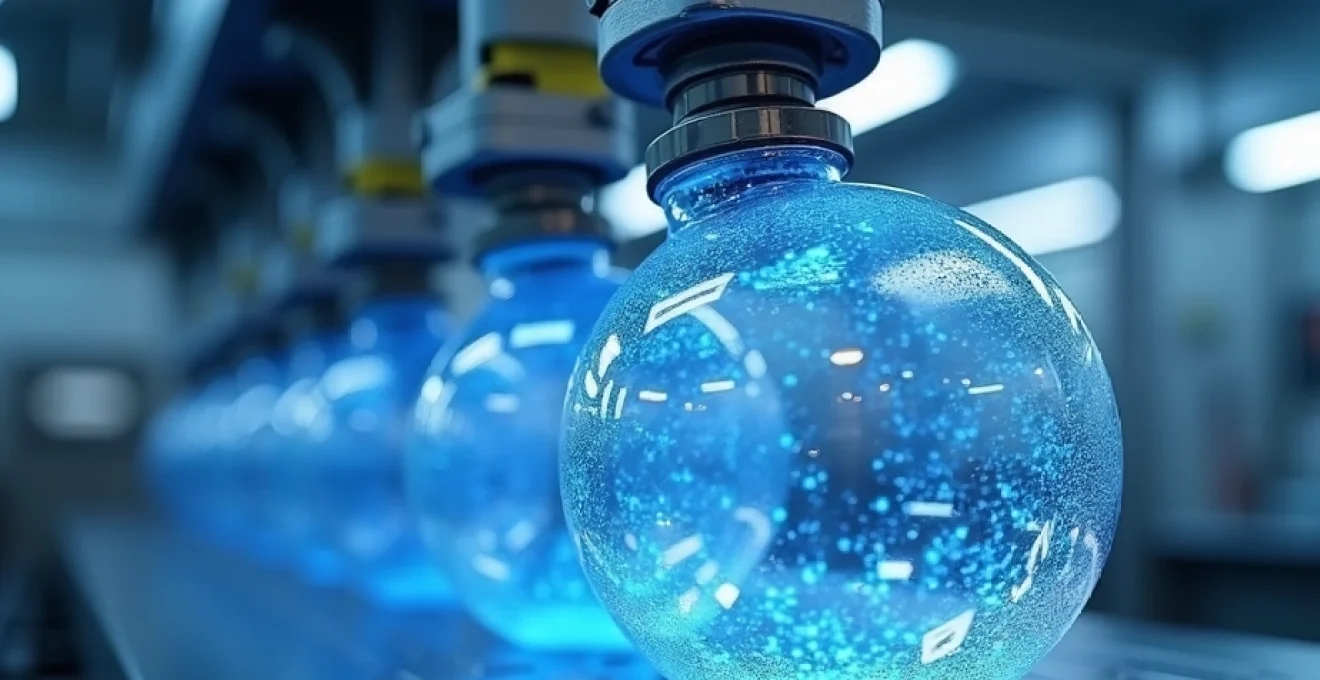
The plastics and polymers manufacturing sector stands at the forefront of modern industrial innovation, constantly pushing boundaries to create stronger, lighter, and more efficient products. Within this dynamic landscape, nitrogen-assisted molding has emerged as a transformative technology that revolutionises how manufacturers approach polymer processing. This sophisticated technique harnesses the unique properties of nitrogen gas to enhance product quality, reduce material consumption, and optimise production cycles across diverse applications.
Nitrogen’s role in polymer processing extends far beyond simple atmospheric displacement. Its inert characteristics and precise controllability make it an invaluable tool for creating superior plastic components whilst simultaneously reducing manufacturing costs. From automotive components requiring exceptional strength-to-weight ratios to medical devices demanding pristine surface finishes, nitrogen-assisted molding delivers consistent, measurable improvements that traditional processing methods simply cannot match.
Nitrogen gas injection fundamentals in thermoplastic processing
Understanding the fundamental principles of nitrogen gas injection in thermoplastic processing requires examining how this inert gas interacts with molten polymers during the manufacturing cycle. The process involves introducing high-pressure nitrogen into partially or fully filled mould cavities, where it creates controlled hollow sections whilst maintaining external surface integrity. This technique operates on the principle that nitrogen, being chemically inert, will not react with polymer chains or introduce contaminants that could compromise material properties.
The timing of nitrogen injection proves critical to achieving optimal results. Precise control over injection timing determines whether the gas creates uniform hollow cores, eliminates sink marks, or provides enhanced surface definition. Modern injection systems utilise sophisticated pressure monitoring and flow control mechanisms to ensure consistent gas distribution throughout the mould cavity, regardless of part geometry or polymer viscosity variations.
Inert atmosphere creation through High-Purity N2 systems
Creating an effective inert atmosphere requires nitrogen purity levels typically exceeding 99.5%, ensuring minimal oxygen content that could otherwise lead to polymer degradation or discolouration. High-purity nitrogen systems employ advanced filtration and purification technologies to remove moisture, oxygen, and other atmospheric contaminants that could interfere with the molding process. These systems continuously monitor gas quality through integrated sensors that detect even trace amounts of impurities.
The displacement of oxygen within the mould cavity serves multiple purposes beyond preventing oxidation. It eliminates the formation of volatile organic compounds that can create surface defects, reduces the risk of polymer chain scission at elevated temperatures, and maintains consistent thermal conductivity throughout the cooling phase. Professional-grade nitrogen generators typically deliver gas at purities between 95% and 99.999%, with selection depending on specific application requirements and quality standards.
Pressure differential management in cavity filling applications
Effective pressure differential management ensures uniform polymer distribution whilst preventing gas breakthrough or incomplete filling. The process requires careful calibration of injection pressure relative to polymer melt viscosity, with typical operating pressures ranging from 50 to 200 bar depending on part geometry and material characteristics. Advanced control systems monitor cavity pressure in real-time, automatically adjusting gas flow rates to maintain optimal filling patterns.
Pressure differential calculations must account for polymer shrinkage rates, thermal expansion coefficients, and cooling gradients throughout the part cross-section. Sophisticated modeling software helps engineers predict optimal pressure profiles before production begins, reducing trial-and-error iterations and minimising material waste during process development phases.
Temperature control mechanisms during Gas-Assisted injection cycles
Temperature management during nitrogen-assisted cycles involves coordinating gas injection timing with polymer thermal properties to achieve optimal part formation. The introduction of nitrogen at specific temperatures helps control cooling rates, preventing rapid thermal gradients that could induce internal stresses or dimensional instability. Temperature sensors positioned throughout the mould cavity provide continuous feedback for automated control systems.
Nitrogen’s thermal properties contribute significantly to heat transfer efficiency during the cooling phase. Its low thermal conductivity compared to the mould material creates insulating effects within hollow sections, whilst its expansion characteristics help maintain cavity pressure as the polymer solidifies. This dual thermal behaviour enables manufacturers to achieve shorter cycle times without compromising part quality or dimensional accuracy.
Molecular weight distribution effects on polymer flow behaviour
Molecular weight distribution significantly influences how polymers respond to nitrogen injection, affecting flow patterns, gas penetration depth, and final part characteristics. High molecular weight polymers typically exhibit greater melt strength, enabling better gas retention and more uniform hollow section formation. Conversely, lower molecular weight materials may require adjusted injection parameters to prevent gas breakthrough or inconsistent wall thickness distribution.
The relationship between molecular weight distribution and shear sensitivity becomes particularly important during nitrogen-assisted processing. Polymers with broad molecular weight distributions often demonstrate improved processability under the varying shear conditions created by gas injection, whilst narrow distribution materials may require more precise parameter control to achieve consistent results across production runs.
Advanced moulding technologies utilising Nitrogen-Assisted processing
Modern manufacturing facilities increasingly adopt sophisticated nitrogen-assisted technologies that extend far beyond conventional gas injection molding. These advanced systems integrate multiple processing techniques, combining nitrogen utilisation with cutting-edge mould design, precision control systems, and innovative material handling approaches. The result is manufacturing capabilities that produce complex geometries with exceptional quality whilst maintaining economic viability for high-volume production scenarios.
Leading manufacturers report productivity increases of 15-30% when implementing comprehensive nitrogen-assisted processing systems compared to traditional molding approaches.
Gas-assisted injection moulding (GAIM) for hollow part manufacturing
Gas-Assisted Injection Moulding represents the most widely adopted nitrogen-assisted technology, offering manufacturers the ability to create hollow sections within solid polymer components. The process typically follows either short-shot or overflow methodologies, each suited to specific part geometries and quality requirements. Short-shot GAIM involves partially filling the mould cavity before nitrogen injection, allowing the gas to push remaining polymer into detailed areas whilst creating internal hollow channels.
Overflow GAIM completely fills the mould cavity before introducing nitrogen to displace molten polymer from predetermined core areas into overflow chambers. This approach provides superior surface finish control and dimensional accuracy, making it ideal for visible components requiring exceptional aesthetic quality. Advanced GAIM systems can reduce part weight by 10-40% whilst maintaining or improving structural integrity compared to solid molded alternatives.
The economic benefits of GAIM extend beyond material savings to include reduced cycle times, lower clamping forces, and decreased energy consumption. Parts that previously required secondary operations for hollow section creation can now be manufactured as single-piece components, eliminating assembly costs and improving overall product reliability through reduced joint interfaces.
Microcellular foam injection moulding with supercritical N2
Microcellular foam injection moulding utilises supercritical nitrogen to create controlled cellular structures within polymer matrices, achieving significant weight reductions whilst maintaining mechanical properties. The process involves dissolving supercritical nitrogen into the polymer melt under high pressure, then rapidly depressurising to create nucleation sites for uniform cell formation. Cell sizes typically range from 10-100 micrometers, providing optimal strength-to-weight ratios for structural applications.
Supercritical nitrogen systems operate at pressures exceeding 74 bar and temperatures above -147°C, conditions that allow nitrogen to exhibit unique solvent-like properties whilst remaining environmentally inert. This state enables greater gas solubility in polymer melts, resulting in higher cell densities and more uniform foam structures compared to conventional blowing agents. Microcellular processing can achieve weight reductions of 5-20% whilst improving impact resistance and reducing warpage in thin-walled applications.
Multi-component moulding systems incorporating nitrogen purging
Multi-component moulding systems benefit significantly from nitrogen purging capabilities that prevent cross-contamination between different polymer materials during sequential injection phases. Nitrogen creates barriers between incompatible materials, ensures clean interfaces for optimal bonding, and eliminates trapped air that could create weak points or aesthetic defects. These systems are particularly valuable for producing components with varying hardness, colour, or chemical resistance requirements.
The integration of nitrogen purging in multi-shot applications requires sophisticated valve systems and precise timing control to coordinate gas introduction with material changeovers. Advanced purging protocols can reduce material waste by up to 50% during colour or grade transitions whilst maintaining consistent part quality throughout production runs.
Push-pull processing technology for enhanced surface finish
Push-pull processing technology combines nitrogen injection with dynamic cavity size variation to eliminate surface defects and improve dimensional consistency. The technique involves slightly opening the mould during gas injection, allowing polymer expansion against cavity surfaces before returning to final dimensions. This approach eliminates sink marks, improves surface gloss, and reduces residual stresses that could cause long-term dimensional instability.
Push-pull systems require precise coordination between mould movement, nitrogen injection timing, and polymer cooling rates. The technology proves particularly effective for large, flat surfaces where conventional processing often produces visible surface imperfections. Implementation of push-pull technology can improve surface quality ratings by 40-60% compared to standard injection moulding approaches.
Counter-pressure moulding applications in High-Performance polymers
Counter-pressure moulding utilises nitrogen to create uniform pressure distribution throughout complex mould cavities, ensuring complete filling of intricate geometries in high-performance polymer applications. The technique applies controlled nitrogen pressure to cavity surfaces before polymer injection, preventing air entrapment and ensuring consistent packing throughout the part cross-section. This approach proves essential for processing crystalline polymers that exhibit rapid viscosity changes during cooling.
High-performance polymers such as PEEK, PPS, and LCP benefit significantly from counter-pressure processing due to their challenging flow characteristics and narrow processing windows. Counter-pressure systems enable processing of these materials at lower injection pressures whilst achieving superior mechanical properties and dimensional accuracy compared to conventional processing methods.
Material-specific applications across polymer categories
Different polymer categories respond uniquely to nitrogen-assisted processing, requiring tailored approaches to maximise benefits whilst accommodating specific material characteristics. Understanding these material-specific requirements enables manufacturers to optimise processing parameters, predict performance outcomes, and select appropriate nitrogen systems for their specific applications. The versatility of nitrogen-assisted processing extends across virtually all thermoplastic categories, from commodity polymers to advanced engineering materials.
Polyethylene and polypropylene processing with nitrogen enhancement
Polyethylene and polypropylene, representing the largest volume thermoplastics globally, demonstrate exceptional compatibility with nitrogen-assisted processing due to their semicrystalline nature and processing flexibility. These materials benefit from nitrogen injection through improved dimensional stability, reduced warpage, and enhanced impact resistance. The relatively low processing temperatures required for polyolefins create ideal conditions for nitrogen solubility and uniform gas distribution.
HDPE applications particularly benefit from nitrogen assistance in blow moulding operations, where gas injection helps achieve uniform wall thickness distribution and improved barrier properties. PP processing utilises nitrogen to eliminate sink marks in thick-walled applications such as automotive interior components, achieving weight reductions of 15-25% whilst maintaining structural requirements. Advanced polyolefin grades specifically formulated for gas-assisted processing exhibit improved melt strength and enhanced gas retention characteristics.
Engineering thermoplastics: PEEK, POM, and nylon 6/6 applications
Engineering thermoplastics require more sophisticated nitrogen-assisted processing approaches due to their higher processing temperatures, narrower processing windows, and enhanced mechanical properties. PEEK applications benefit from nitrogen injection in aerospace and medical components where weight reduction and dimensional precision are critical. The high-temperature stability of PEEK enables nitrogen processing at temperatures exceeding 400°C, creating opportunities for complex geometries previously impossible with conventional molding.
POM processing utilises nitrogen to prevent aldehyde formation during molding, maintaining material integrity whilst achieving superior surface finish. Nylon 6/6 applications benefit from moisture displacement provided by dry nitrogen atmospheres, preventing hydrolysis reactions that could degrade mechanical properties. Glass-filled engineering grades particularly benefit from nitrogen processing, as gas injection helps achieve uniform fiber distribution whilst reducing fiber breakage during mold filling.
Thermoplastic elastomers and Nitrogen-Assisted vulcanisation
Thermoplastic elastomers (TPE) present unique opportunities for nitrogen-assisted processing due to their dual-phase morphology and processing versatility. Nitrogen injection in TPE processing helps maintain soft segment integrity whilst ensuring uniform hard segment distribution, resulting in improved mechanical properties and processing consistency. The technique proves particularly valuable for overmolding applications where TPE components are molded directly onto rigid substrates.
Dynamic vulcanisation processes benefit from nitrogen atmospheres that prevent oxidative degradation during high-temperature mixing and molding operations. TPE compounds processed with nitrogen assistance demonstrate improved compression set resistance and enhanced low-temperature flexibility compared to conventionally processed materials.
Biopolymer processing: PLA and PHA Nitrogen-Compatible systems
Biopolymers such as PLA and PHA require careful consideration of nitrogen processing parameters due to their thermal sensitivity and hydrolytic susceptibility. Nitrogen-assisted processing of PLA provides moisture exclusion benefits that prevent hydrolytic chain scission during processing, whilst gas injection capabilities enable weight reduction in packaging applications without compromising barrier properties or mechanical strength.
PHA processing utilises nitrogen atmospheres to prevent oxidative degradation whilst maintaining the material’s biodegradable characteristics. The relatively low processing temperatures required for most biopolymers create favourable conditions for nitrogen solubility and cellular structure formation. Biopolymer compounds specifically designed for nitrogen processing often incorporate nucleating agents that enhance cellular structure uniformity and mechanical properties.
Industrial equipment and processing parameter optimisation
Successful implementation of nitrogen-assisted molding requires sophisticated equipment configurations and precise parameter optimisation to achieve consistent, high-quality results. Modern nitrogen injection systems integrate advanced control algorithms, real-time monitoring capabilities, and predictive maintenance features that ensure optimal performance throughout extended production runs. Equipment selection must account for production volume requirements, part complexity, material characteristics, and quality specifications to achieve maximum return on investment.
Parameter optimisation involves balancing multiple interrelated variables including injection pressure, timing sequences, temperature profiles, and gas flow rates. Advanced process control systems utilise machine learning algorithms to continuously refine parameter settings based on real-time quality feedback and historical performance data. This approach enables manufacturers to achieve process optimisation levels that would be impossible through manual parameter adjustment alone.
Industry studies indicate that optimised nitrogen-assisted processing systems achieve 99.2% repeatability in critical dimensional characteristics compared to 94.8% for conventional processing methods.
Equipment manufacturers now offer modular nitrogen generation systems that can be scaled according to production requirements, enabling cost-effective implementation for operations ranging from prototype development to high-volume manufacturing. These systems incorporate advanced purification technologies, redundant safety features, and automated maintenance scheduling that minimises downtime whilst ensuring consistent gas quality throughout production cycles.
| Parameter Category | Optimisation Range | Typical Improvement | Monitoring Frequency |
|---|---|---|---|
| Injection Pressure | 50-200 bar | 15-30% cycle reduction | Continuous |
| Gas Purity Level | 95-99.999% | 40-60% defect reduction | Hourly |
| Temperature Control | ±2°C precision | 25% dimensional improvement | Real-time |
| Flow Rate Control | 0.1-50 SCFM | 20% material savings | Per cycle |
Quality enhancement mechanisms through controlled atmosphere processing
Controlled atmosphere processing represents a fundamental shift in how manufacturers approach quality assurance in polymer production. By maintaining precise atmospheric conditions throughout the molding cycle, nitrogen-assisted systems eliminate many variables that traditionally contributed to quality inconsistencies. The result is manufacturing processes capable of achieving Six Sigma quality levels whilst maintaining economic competitiveness in global markets.
Quality enhancement mechanisms operate at multiple levels, from molecular-scale polymer protection to macro-scale dimensional control. Nitrogen’s inert characteristics prevent oxidative degradation that could weaken polymer chains, whilst its controlled pressure application eliminates sink marks, voids, and other structural defects. Advanced quality monitoring systems continuously track atmospheric conditions, pressure profiles, and temperature distributions to ensure optimal processing conditions throughout each production cycle.
Surface quality improvements achieved through nitrogen processing often exceed customer expectations, with surface roughness measurements showing 50-70% improvement compared to conventional molding. This enhancement stems
from nitrogen’s ability to displace atmospheric contaminants whilst creating uniform pressure distribution across complex part geometries. The elimination of volatile organic compounds during processing prevents surface blemishing and ensures consistent colour matching across production batches.
Statistical process control implementation with nitrogen-assisted systems demonstrates remarkable consistency improvements. Manufacturing facilities report defect rates below 50 parts per million when utilising properly calibrated nitrogen injection systems, compared to 200-500 ppm for conventional processing methods. Real-time quality monitoring enables immediate parameter adjustments that prevent defective parts from reaching downstream operations, reducing scrap rates and improving overall equipment effectiveness.
The controlled atmosphere environment also enables processing of sensitive additives and colorants that would otherwise degrade under oxidative conditions. UV stabilisers, antioxidants, and flame retardants maintain their effectiveness throughout the processing cycle, resulting in end products that meet stringent performance requirements without additive degradation. This capability proves particularly valuable in automotive and electronics applications where long-term material stability is critical.
Economic advantages and production efficiency metrics in nitrogen-enhanced manufacturing
The economic impact of nitrogen-enhanced manufacturing extends far beyond simple material cost reductions, encompassing improved production efficiency, reduced energy consumption, and enhanced equipment longevity. Comprehensive cost-benefit analyses consistently demonstrate positive returns on investment within 18-24 months for most nitrogen-assisted processing implementations. These returns accelerate significantly in high-volume production environments where even marginal per-unit improvements translate to substantial annual savings.
Material savings represent the most immediately visible economic benefit, with typical weight reductions of 15-30% translating directly to raw material cost savings. However, the secondary benefits often prove more significant over extended production runs. Reduced cycle times enable higher throughput on existing equipment, effectively increasing production capacity without capital equipment investments. Energy consumption improvements of 10-20% result from shorter heating cycles and more efficient cooling patterns enabled by nitrogen’s thermal properties.
Equipment longevity improvements stem from reduced cavity pressures that decrease wear on moulds, injection systems, and clamping mechanisms. Manufacturing facilities report mould life extensions of 25-40% when utilising nitrogen-assisted processing, significantly reducing tooling replacement costs and production downtime. The lower operating pressures also enable the use of aluminium tooling for certain applications, providing additional cost savings and faster thermal response compared to traditional steel moulds.
Labour efficiency gains result from reduced setup times, fewer quality-related production interruptions, and simplified process control requirements. Automated nitrogen systems require minimal operator intervention once properly configured, enabling skilled technicians to focus on higher-value activities such as process optimisation and preventive maintenance. The predictable nature of nitrogen-assisted processes also reduces the expertise level required for routine production operations.
Manufacturing economics studies indicate that nitrogen-enhanced production systems achieve 23% lower total cost of ownership compared to conventional processing methods over five-year operational periods.
The scalability of nitrogen generation systems provides additional economic flexibility, enabling manufacturers to right-size their gas supply capabilities according to actual production requirements rather than peak demand scenarios. This approach eliminates the carrying costs associated with excess cylinder inventory whilst providing operational flexibility to accommodate production variations. Advanced nitrogen generators incorporate demand-responsive controls that automatically adjust gas production rates based on real-time consumption patterns, optimising energy efficiency throughout varying production schedules.
Quality-related cost improvements encompass reduced scrap rates, fewer customer returns, and enhanced brand reputation through consistent product quality. The elimination of secondary operations such as machining hollow sections or applying surface treatments provides direct labour cost savings whilst improving overall production flow efficiency. Supply chain benefits include reduced transportation costs due to lighter components and improved packaging efficiency through optimised part geometries.
Return on investment calculations must also consider the competitive advantages enabled by nitrogen-assisted processing capabilities. The ability to produce complex geometries, achieve superior surface finishes, and maintain tighter dimensional tolerances opens new market opportunities that justify premium pricing strategies. Market differentiation capabilities provided by advanced processing technologies often prove more valuable than direct cost savings in competitive industrial environments.