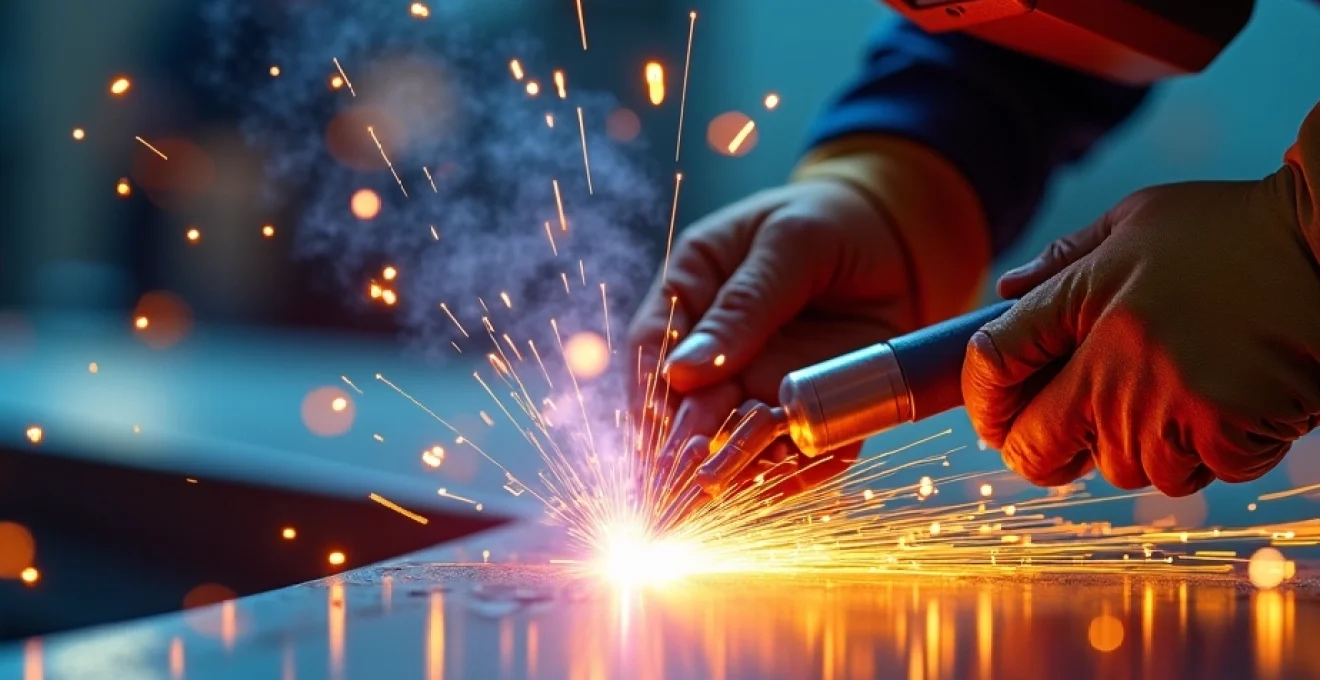
Argon gas represents one of the most critical components in modern welding and industrial metalwork, serving as the backbone of high-quality fabrication processes across countless industries. This inert gas, comprising nearly 1% of Earth’s atmosphere, has revolutionised welding techniques since its widespread adoption, enabling manufacturers to achieve previously unattainable levels of precision, durability, and aesthetic quality in metal joints. From aerospace components requiring absolute structural integrity to automotive parts demanding consistent performance, argon’s unique properties make it indispensable for professional welding operations. The gas’s ability to create protective atmospheres around molten metal has transformed manufacturing capabilities, allowing engineers to work with reactive materials that would otherwise be impossible to weld effectively.
Understanding argon’s role in welding extends far beyond simply knowing it prevents oxidation. Modern industrial applications leverage argon’s specific characteristics to optimise everything from arc stability to penetration profiles, making it essential knowledge for anyone involved in advanced metalwork. The precision manufacturing sector particularly benefits from argon’s consistency, as even minor variations in shielding gas quality can significantly impact final product specifications and long-term performance.
Argon gas properties and metallurgical characteristics in welding applications
Inert gas behaviour and oxidation prevention mechanisms
Argon’s classification as a noble gas fundamentally defines its welding applications, as its complete electron shell configuration prevents chemical reactions with other elements during the welding process. This inert behaviour creates an ideal protective environment around the weld pool, effectively displacing atmospheric gases that would otherwise contaminate the molten metal. When argon surrounds the welding area, it forms a stable blanket that prevents oxygen and nitrogen from reaching the hot metal surfaces, eliminating the formation of oxides and nitrides that compromise weld quality.
The oxidation prevention mechanism operates through density displacement, where argon’s molecular weight of 39.95 atomic mass units makes it approximately 38% heavier than air. This density advantage ensures that argon settles around the weld area and remains in position even when subjected to thermal currents and atmospheric disturbances. Professional welders rely on this characteristic to maintain consistent shielding coverage, particularly when working in challenging positions or environments where air currents might disrupt lighter shielding gases.
Density considerations for shielding gas coverage in MIG and TIG welding
The density characteristics of argon play a crucial role in determining optimal flow rates and coverage patterns for different welding positions. In flat and horizontal welding positions, argon’s higher density provides excellent coverage at relatively low flow rates, typically ranging from 10-15 cubic feet per hour for TIG welding and 20-25 CFH for MIG applications. However, vertical and overhead welding positions require careful consideration of gas flow adjustments to maintain adequate shielding despite gravitational effects on the heavier gas.
Understanding density-related behaviour helps welders optimise their technique for specific applications. In confined spaces or when welding in grooves, argon’s tendency to pool can create excellent long-lasting protection, but it may also lead to gas entrapment if flow rates are excessive. Professional welding operations often establish specific protocols for different welding positions, adjusting flow rates based on joint geometry, ambient conditions, and material thickness to ensure consistent shielding effectiveness throughout the welding process.
Thermal conductivity impact on arc stability and heat transfer
Argon’s relatively low thermal conductivity compared to other shielding gases significantly influences arc characteristics and heat distribution patterns during welding. With a thermal conductivity of approximately 0.0177 W/m·K at room temperature, argon creates a constricted arc column that concentrates heat in a narrow zone, resulting in deeper penetration with less overall heat input. This characteristic makes argon particularly valuable for welding applications requiring precise heat control and minimal heat-affected zone development.
The thermal properties of argon contribute to smoother arc starting and more stable arc maintenance throughout the welding process. Unlike gases with higher thermal conductivity that can create wandering or unstable arcs, argon provides consistent arc behaviour that translates into more predictable weld results. This stability becomes especially important when welding thin materials where excessive heat input could cause warping or burn-through, allowing skilled welders to maintain tight control over the molten pool dynamics.
Ionisation potential effects on arc initiation and maintenance
The ionisation potential of argon, measured at 15.76 electron volts, represents an optimal balance for welding applications, being low enough for easy arc initiation while high enough to maintain stable arc characteristics. This ionisation potential facilitates smooth arc starts even at low current settings, making argon ideal for precision welding applications where consistent arc initiation is critical. The gas ionises readily under welding conditions, creating a conductive plasma column that supports stable current flow and heat generation.
Arc maintenance benefits significantly from argon’s ionisation characteristics, as the gas maintains consistent electrical conductivity throughout varying current ranges. This property enables welders to use pulsed welding techniques effectively, where current levels fluctuate rapidly between high and low values. The stable ionisation behaviour ensures that the arc remains consistent during current transitions, preventing arc extinguishing or irregular plasma formation that could compromise weld quality or create defects in the final joint.
TIG welding with argon: technical parameters and process optimisation
Tungsten electrode performance in pure argon atmospheres
Pure argon environments provide optimal conditions for tungsten electrode performance, as the inert atmosphere prevents electrode contamination and oxidation that can degrade arc quality and electrode life. In pure argon, tungsten electrodes maintain their tip geometry longer, reducing the frequency of electrode preparation and regrinding required during extended welding operations. The stable arc characteristics achieved in pure argon allow for precise control over electrode positioning and arc length, critical factors in high-quality TIG welding applications.
Different tungsten electrode types respond variably to pure argon atmospheres, with thoriated and lanthanated electrodes showing excellent performance characteristics. Thoriated tungsten electrodes demonstrate superior arc starting ability and maintain stable arcs at lower current levels, while lanthanated electrodes offer similar performance with reduced health concerns. The choice of electrode type should align with specific application requirements, considering factors such as material thickness, current range, and desired penetration characteristics.
Arc characteristics and penetration profiles in stainless steel applications
When welding stainless steel with pure argon, the arc exhibits characteristic narrow penetration profiles with excellent sidewall fusion and minimal heat-affected zone development. This penetration pattern proves particularly beneficial for stainless steel applications where maintaining corrosion resistance properties in the HAZ is critical. The concentrated heat input achieved with argon shielding allows for faster travel speeds while maintaining complete joint penetration, improving productivity without compromising quality standards.
Stainless steel welding in pure argon atmospheres requires careful attention to travel speed and heat input management to prevent carbide precipitation and maintain optimal microstructure properties. The narrow arc cone produced by argon concentration helps maintain precise control over the molten pool, enabling welders to achieve consistent bead profiles and avoid common defects such as lack of fusion or excessive reinforcement. Professional stainless steel fabrication often specifies pure argon for critical applications where material properties and appearance are paramount considerations.
Flow rate calculations for optimal gas coverage in aluminium welding
Aluminium welding with argon requires specific flow rate calculations based on material thickness, joint configuration, and ambient conditions to ensure adequate oxide prevention and arc stability. Standard flow rate recommendations start at approximately 15-20 CFH for thin aluminium sections up to 3mm thickness, increasing progressively for thicker materials that generate more heat and require enhanced shielding coverage. The reactive nature of aluminium makes proper shielding absolutely critical, as even minor atmospheric contamination can result in oxide inclusions and compromised joint strength.
Calculating optimal flow rates involves considering multiple variables including nozzle diameter, standoff distance, and welding position. Cup diameter selections directly influence required flow rates, with larger cups requiring proportionally higher gas volumes to maintain effective coverage. Professional aluminium welding operations often use flow rate charts that account for these variables, providing standardised parameters that ensure consistent results across different operators and welding conditions while minimising gas consumption and operational costs.
Contamination prevention in aerospace grade titanium joints
Aerospace titanium welding demands exceptional contamination prevention measures, as titanium’s high reactivity with atmospheric gases at elevated temperatures can create brittle intermetallic compounds that compromise joint integrity. Pure argon shielding provides the primary contamination barrier, but aerospace applications typically require additional back purging and trailing shields to ensure complete atmospheric exclusion throughout the cooling cycle. The critical nature of aerospace components necessitates zero tolerance for contamination-related defects.
Titanium welding procedures specify minimum argon purity levels of 99.995% or higher, with moisture content below 10 parts per million to prevent hydrogen-induced cracking. Pre-weld purging procedures typically involve flowing argon through the joint area for several minutes before arc initiation, followed by continued gas coverage until the weld zone cools below the critical temperature range where contamination reactions occur. These stringent requirements reflect the aerospace industry’s commitment to absolute reliability and safety in critical structural applications.
Back purging techniques for root pass protection in pipeline welding
Pipeline welding applications utilise sophisticated back purging techniques to protect root pass integrity, as internal oxidation can create stress concentration points that lead to service failures. Argon back purging involves introducing shielding gas into the pipe interior, creating an inert atmosphere on the backside of the root pass during welding. This technique requires careful flow rate management to prevent excessive turbulence while ensuring complete atmospheric displacement from the welding zone.
Professional pipeline welding procedures specify back purging protocols that include pre-purge durations, flow rate settings, and post-weld cooling coverage to ensure consistent root pass quality. Oxygen monitoring equipment often verifies adequate purge gas effectiveness before welding commences, with typical oxygen levels below 100 parts per million required for critical pipeline applications. The investment in proper back purging techniques pays dividends in long-term pipeline reliability and reduced maintenance requirements throughout the service life of the installation.
MIG/MAG welding applications: Argon-Based shielding gas mixtures
Argon-co2 binary mixtures for carbon steel fabrication
Binary mixtures of argon and carbon dioxide represent the most widely used shielding gas combinations for carbon steel MIG welding, offering an optimal balance of arc stability, penetration characteristics, and cost effectiveness. The most common mixture ratios include 75% argon with 25% CO2, 80% argon with 20% CO2, and 85% argon with 15% CO2, each providing distinct performance characteristics suited to different applications and material thicknesses. These mixtures combine argon’s arc stability benefits with CO2’s enhanced penetration and lower cost, creating versatile solutions for general fabrication work.
The CO2 component in these mixtures contributes active gas characteristics that promote deeper weld penetration and faster travel speeds compared to pure argon applications. However, the reactive nature of CO2 also increases spatter production and can create a less stable arc compared to pure inert gas systems. Professional fabrication operations select specific mixture ratios based on material thickness, required penetration depth, and acceptable spatter levels, with higher argon content mixtures preferred for applications requiring superior bead appearance and reduced post-weld cleanup.
Tri-mix compositions: Argon-Helium-CO2 for thick section welding
Tri-mix shielding gas compositions incorporating argon, helium, and carbon dioxide provide enhanced capabilities for thick section welding applications where single-pass penetration and high deposition rates are priorities. Typical tri-mix formulations include combinations such as 90% argon, 7.5% helium, and 2.5% CO2, or 60% argon, 35% helium, and 5% CO2, depending on specific application requirements. The helium component increases arc voltage and heat input, enabling deeper penetration in thick materials while maintaining the arc stability benefits provided by the argon base.
These advanced gas mixtures find particular application in heavy industrial fabrication, shipbuilding, and structural steel construction where plate thicknesses exceed conventional MIG welding capabilities. Helium’s higher thermal conductivity creates a broader, hotter arc that can effectively fuse thick sections while the argon component maintains directional arc stability and reduces operator fatigue. The small CO2 addition provides slight penetration enhancement and helps control the overall arc characteristics, resulting in improved sidewall fusion and reduced risk of lack of fusion defects in challenging joint configurations.
Spray transfer mode optimisation with high argon content
High argon content shielding gases enable optimal spray transfer mode operation, characterised by smooth metal transfer with minimal spatter and excellent bead appearance. Spray transfer requires minimum argon concentrations typically above 80% to maintain the stable arc conditions necessary for consistent droplet formation and transfer. The inert atmosphere provided by high argon content prevents oxidation of the transferring metal droplets, resulting in cleaner welds with superior mechanical properties and corrosion resistance.
Spray transfer optimisation involves careful coordination of current settings, wire feed speed, and gas composition to achieve the transition current where smooth spray transfer begins. Higher argon percentages reduce the transition current required, allowing spray transfer at lower current levels and expanding the useful operating range for thin to medium thickness materials. This capability provides welders greater flexibility in technique selection and enables high-quality results across a broader range of joint configurations and material combinations.
Spatter reduction mechanisms in short circuit transfer processes
Argon-rich shielding gas mixtures significantly reduce spatter formation in short circuit transfer MIG welding through several complementary mechanisms that improve the metal transfer process. The inert atmosphere prevents oxidation of the wire electrode and molten droplets, reducing surface tension variations that can cause irregular droplet detachment and associated spatter. Additionally, argon’s lower ionisation potential creates more stable arc reignition after each short circuit event, minimising the violent arc restoration that typically generates spatter in short circuit welding.
Professional fabrication operations leverage these spatter reduction benefits to improve productivity and reduce finishing costs associated with spatter removal and surface preparation. The reduction in spatter also minimises contamination of surrounding base metal surfaces, particularly important in applications where post-weld surface treatments or coatings will be applied. Optimised argon mixtures for short circuit transfer typically contain 85-90% argon with balance CO2, providing excellent spatter control while maintaining adequate penetration for structural applications.
Advanced shielding gas technology continues to evolve, with modern tri-mix formulations enabling previously impossible combinations of penetration depth, travel speed, and weld quality that define the current state of industrial welding capabilities.
Advanced industrial metalwork: specialised argon applications
Beyond conventional welding applications, argon serves critical roles in advanced metalworking processes including additive manufacturing, surface modification, and precision machining operations. Laser welding systems increasingly incorporate argon shielding to prevent oxidation during high-energy beam processing, where conventional shielding methods prove inadequate. The gas provides essential atmospheric control for powder bed fusion additive manufacturing processes, preventing powder oxidation and ensuring consistent material properties in complex three-dimensional components.
Specialised argon applications extend into heat treatment processes where controlled atmospheres are essential for achieving specific metallurgical properties. Vacuum furnace back-filling with high-purity argon prevents oxidation during cooling cycles while maintaining precise atmospheric control throughout temperature transitions. These advanced applications require argon purity levels exceeding 99.999%, with stringent control over trace contaminants that could influence final material properties or surface characteristics.
The electronics industry utilises ultra-high purity argon for semiconductor manufacturing processes, where even parts-per-billion contamination levels can compromise device performance. Argon plasma cleaning processes remove organic contaminants from sensitive surfaces without introducing chemical residues, making it invaluable for precision electronic component manufacturing. These demanding applications push argon purification technology to its limits, requiring sophisticated monitoring and quality control systems to maintain the required purity standards.
Emerging applications in nanotechnology and advanced materials processing continue expanding argon’s role in industrial metalwork. Atomic layer deposition processes rely on argon carrier gas for precise material coating applications, while ion beam sputtering systems use argon ions for nanoscale material removal and surface modification. These cutting-edge technologies demonstrate argon’s versatility and continuing importance in advancing manufacturing capabilities across diverse industrial sectors.
Plasma cutting and thermal processing with argon enhancement
Plasma cutting systems benefit significantly from argon enhancement, particularly when processing stainless steel and aluminium materials where cut edge quality and minimal heat-affected zones are critical requirements. Argon-hydrogen mixtures provide excellent cutting performance on stainless steel, with the argon component maintaining arc stability while hydrogen enhances cutting speed and edge quality. The inert atmosphere create
d by argon significantly reduces dross formation and improves dimensional accuracy compared to conventional air plasma systems. The controlled atmospheric conditions prevent excessive oxidation at the cut edge, resulting in smoother surfaces that require minimal secondary finishing operations.
High-current plasma cutting applications benefit from argon’s thermal characteristics, which help maintain consistent arc voltage and cutting speed throughout extended operations. The gas provides superior arc constriction compared to air or nitrogen plasma systems, concentrating the thermal energy into a narrower kerf width while maintaining excellent cutting speeds. Professional fabrication shops often specify argon-enhanced plasma cutting for precision work where tight tolerances and superior edge quality justify the additional gas costs.
Thermal processing applications beyond cutting also leverage argon’s protective properties, particularly in flame straightening and stress relieving operations where controlled heating is essential. The inert atmosphere prevents scale formation on heated surfaces, maintaining dimensional accuracy and reducing subsequent surface preparation requirements. Advanced thermal processing systems integrate argon delivery with temperature monitoring to ensure optimal heating profiles while preventing oxidation-related distortion in critical components.
Quality control and gas purity standards in professional welding operations
Professional welding operations depend on rigorous quality control measures to ensure consistent argon gas purity and delivery performance throughout production processes. Industry standards typically specify minimum purity levels of 99.996% for general welding applications, with aerospace and nuclear applications requiring ultra-high purity grades exceeding 99.999%. These stringent requirements necessitate comprehensive testing protocols that monitor not only overall purity but also specific contaminant levels including oxygen, nitrogen, moisture, and hydrocarbon compounds that can compromise weld quality.
Gas sampling and analysis procedures form the backbone of quality assurance programs, with many facilities implementing continuous monitoring systems that provide real-time feedback on gas composition. Portable gas analysers enable field verification of gas purity at point-of-use locations, ensuring that distribution systems maintain specified quality levels throughout the facility. Regular calibration of monitoring equipment against certified reference standards ensures measurement accuracy and traceability to national standards, critical requirements for industries with strict quality documentation requirements.
Storage and distribution system maintenance significantly impacts gas purity preservation, requiring systematic approaches to prevent contamination introduction during handling and transfer operations. High-purity argon systems utilise specialised piping materials, purge procedures, and leak detection protocols to maintain gas quality from storage through final delivery at the welding torch. Professional operations establish preventive maintenance schedules that include system purging, component inspection, and leak testing to ensure continued performance at specified purity levels.
Documentation and traceability requirements in critical industries necessitate comprehensive record-keeping systems that track gas purity from supplier certification through final use in production welding. Chain of custody procedures ensure that gas quality documentation accompanies materials throughout the supply chain, providing auditable evidence of compliance with specified requirements. These quality systems enable rapid identification and resolution of any purity-related issues that could impact production quality or schedule performance.
Advanced quality control implementations incorporate statistical process control methods that analyse gas consumption patterns, purity trends, and correlation with weld quality metrics to optimise overall system performance. Data analytics platforms aggregate information from multiple monitoring points to identify potential system degradation before it impacts production quality, enabling proactive maintenance and system optimisation. This sophisticated approach to quality management represents the current state-of-the-art in professional welding gas management, ensuring consistent performance while minimising operational disruptions and quality excursions.
The future of industrial welding increasingly depends on integrated quality systems that seamlessly combine gas purity monitoring, process control, and predictive maintenance to achieve unprecedented levels of consistency and reliability in critical manufacturing applications.
Emerging technologies in gas quality monitoring promise even greater precision and automation in maintaining optimal argon purity levels. Laser-based analysers provide real-time composition monitoring with detection limits in the parts-per-billion range, enabling immediate response to purity deviations before they impact welding operations. These advanced systems represent the next generation of quality control technology, positioning argon as an increasingly sophisticated and precisely controlled welding consumable that enables manufacturers to achieve new levels of quality and consistency in their metalworking operations.